Translating Shakespeare takes a knowledge of language, culture, and poetry — both in English and in the target language. There are tradeoffs and pitfalls, but a skilled translator can bring Shakespeare closer to our age, not just to another language. We’re talking with translator Daniel Hahn, author of If This Be Magic: The Unlikely Art of Shakespeare in Translation.
Also, we’re answering listener questions. Send us yours!
Timestamps
00:00 Start
00:21 Intros: Shakespearean insults
07:33 Pronouncing SUDOKU: Why so variable?
15:58 Ingressive speech
20:46 Nonplussed
26:59 Related or Not: Theme from Hugh
28:13 Related or Not: pooch, pouch, pocket, and poach
38:14 Related or Not: caddy and caddie
42:47 Related or Not: hemi-, demi-, and semi-
49:30 Chat with Daniel Hahn: Keeping everything but the words
52:51 Spanish as a language of translation
58:59 Translation closes the distance: Shakespeare in contemporary English
01:07:02 Poetic meter and when to break it
01:11:07 Punctuating the translation
01:16:08 Archaic words and the feel of Shakespeare
01:18:23 Hardest language to translate Skakespeare into?
01:20:43 Staying true to time and culture
01:26:05 Having fun
01:31:12 Monosyllables
01:34:32 The impact of GenAI on translation
01:37:38 Getting people to care about translation
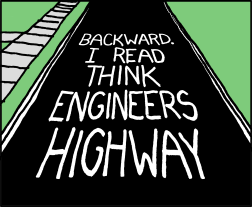
01:40:37 Should multi-line highway word markings start near to us or start far?
01:47:48 Gender and the -ster suffix
01:56:12 Comment from Allyson: Soo-ee!
01:58:03 The Reads
02:02:01 Outtake
Listen to this episode


Watch this episode
@becauselangpod Some of the greatest scenes go one syllable at a time. New episode with Daniel Hahn, author of If This Be Magic: The Unlikely Art of Shakespeare in Translation. Wherever you get your podcasts. https://becauselanguage.com/142-if-this-be-magic/ @knopfdoubledaybooks @penguinrandomhouse ♬ original sound – Because Language
@becauselangpod We're insulting each other in the good old Shakespearean way. Even within a few words, you can see how translating the Bard could be hard. New episode with Daniel Hahn, author of "If This Be Magic: The Unlikely Art of Shakespeare in Translation". https://becauselanguage.com/142-if-this-be-magic/ Shakespeare Insult Generator https://codepo8.github.io/shakespeare-insult-generator/
Patreon supporters
Thanks to all our patrons! Here are our patrons at the Supporter level.
This time, we’re arranging the alphabet in order of when the letters entered the Latin alphabet.
- Aldo
- Amanita
- Amir
- Amy
- Andy B
- Andy from Logophilius
- Ariaflame
- Ayesha
- Becky
- Ben is here
- Canny Archer
- Chris L
- Colleen
- Daniel is here
- Daryl
- Diego
- Elías
- Faux Frenchie
- Fiona
- Hedvig is here
- Helen
- Ignacio
- Iztin
- Kathy
- Keith
- Kevin
- Kristofer
- Lance
- Larry
- Laura
- Linguistic C̷̛̤̰̳͉̺͕̋̚̚͠h̸͈̪̤͇̥͛͂a̶̡̢̛͕̰͈͗͋̐̚o̷̟̹͈̞̔̊͆͑͒̃s̵̍̒̊̈́̚̚ͅ
- LordMortis
- Lyssa
- Lucy
- Luis
- Manú
- Martha
- Meredith
- Mignon
- Molly Dee
- Nasrin
- Nikoli
- Nigel
- O Tim
- PharaohKatt
- Rach
- Rene
- Rodger
- Rosemary
- sæ̃m
- Sonic Snejhog
- Stan
- Steele
- Sydney
- Tony
- Xekri
- gra-mary-en
- Yevaud
- J0HNTR0Y
- James
- Joanna
- John K
- Whitney
- Wolfdog
And our newest patrons:
At the Listener level: Sami
At the Friend level: Daniel Q
And our newest free patrons: Jessica J, Yulia, Paula, and Shannon B
Become a Patreon supporter yourself and get access to bonus episodes and more!
Become a Patron!Show notes
Shakespeare Insult Generator
https://codepo8.github.io/shakespeare-insult-generator/
giglot (adj.) | ShakespearesWords.com
https://www.shakespeareswords.com/public/glossary.aspx?id=17779
Speech: “All the world’s a stage”
https://www.poetryfoundation.org/poems/56966/speech-all-the-worlds-a-stage
The pronunciation of “sudoku” in English
https://languagelog.ldc.upenn.edu/nll/?p=31539
Bluey: S1 Keepy Uppy : ABC iview
https://iview.abc.net.au/show/bluey/series/1/video/CH1702Q019S00
Ingressive Sounds (Sharp Inhale) in Northern Norway | YouTube
https://www.youtube.com/watch?v=AT2m2dVbWwk
What’s going on with ‘nonplussed’?
https://www.merriam-webster.com/grammar/nonplussed
If This Be Magic: The Unlikely Art of Shakespeare in Translation, by Daniel Hahn
https://www.allenandunwin.com/browse/book/Daniel-Hahn-If-This-Be-Magic-9781805301622
Julius Caesar, Act III, Scene I [O, pardon me, thou bleeding piece of earth]
https://poets.org/poem/julius-caesar-act-iii-scene-i-o-pardon-me-thou-bleeding-piece-earth
The Great Bed of Ware
https://www.vam.ac.uk/articles/great-bed-of-ware
Ahead Stop | XKCD.com
https://xkcd.com/781/
Manual on Uniform Traffic Control Devices (MUTCD), 11th Edition of the MUTCD with Revision 1, December 2025
https://mutcd.fhwa.dot.gov/kno_11th_Editionr1.htm
When words split on the road: Recognition costs of across-line destination-name order in pavement markings
https://www.sciencedirect.com/science/article/pii/S136984782600197X
Transcript
[Transcript provided by SpeechDocs Podcast Transcription]
DANIEL: Let’s say it all together. Sudoku.
BEN: Sudoku.
DANIEL: Sudoku.
BEN: Sudoku.
HEDVIG: Sudoku.
BEN: Sudoku.
DANIEL: Sudoku.
BEN: Sudoku.
DANIEL: Sudoku.
BEN: Sadakugu dago voo waahhhh.
DANIEL: [CHUCKLES] Dosokudaaa.
[BECAUSE LANGUAGE THEME]
Hello, and welcome to Because Language, a show about linguistics. The science of language. I’m Daniel Midgley. Let’s meet the team. Back from his trip to distant parts, it’s Ben Ainslie. Hey, Ben.
BEN: Hello. It was hot, and dusty, and I saw a dingo. [CHUCKLES]
DANIEL: Wow. [LAUGHS]
HEDVIG: Nice.
DANIEL: Ben.
BEN: Yes.
DANIEL: I’m going to generate a Shakespearean insult for you from the Shakespeare Insult Generator. Link in the show notes. Ready?
HEDVIG: Nice.
BEN: My loins are girded.
DANIEL: Thou puking, half faced giglet. That’s you.
BEN: Interesting. Do we think PUKE was of the era?
DANIEL: Oh, yes. “Mewling and puking in their nurses arms”, Man for All Seasons.
BEN: That’s fascinating. I fully associated PUKE with Valley Girl 1980s, like surfer lingo, that whole thing was puke for me.
DANIEL: Yeah, I’m going to puke. Well, it’s gotten a new life, but it certainly is Shakespearean. And the word GIGLET appears in Cymbeline. It is a whore-like person or someone who’s fickle or giddy.
HEDVIG: Related to GIGGLE.
DANIEL: Mm. Not sure.
BEN: Perhaps the whores giggle? Oh, I don’t like even saying that word. Perhaps the sex workers giggle. I’m not sure.
DANIEL: Now that I’ve insulted you in a very untimely fashion, it’s linguist and researcher Hedvig Skirgård. Hi, Hedvig.
HEDVIG: Hi. I’m excited. Now what am I going to get?
DANIEL: The lumpish rump-faced whey face. I feel like FACE twice is not very good.
BEN: Yeah. That’s…
HEDVIG: Yeah. It’s not very good.
BEN: I have notes.
HEDVIG: Sorry, was it was whey face? So, I know what whey is. That’s the thing that’s involved in dairy production.
DANIEL: Yes. I imagine that it means you’re very well fed. I should also point out that RUMP FACED doesn’t appear in Shakespeare. It’s RUMP FED. That’s in Macbeth. You’ve been fed on rump, which is the nicest meat, and so you’re probably well fed, pretty healthy looking.
BEN: Hang on, why would that be an insult?
HEDVIG: Well, because people think that being fat is bad.
DANIEL: Because you’re coddled, you’ve been pampered.
HEDVIG: Oh, you’re spoiled. You’ve had born with a silver spoon, etc., etc.
DANIEL: And an insult for me. Ben, would you read this one? Go ahead, hit me.
BEN: Oh, wow. This is another thing that I thought was a lot newer than it was. Thou saucy, beef-witted bugbear!
DANIEL: [CHUCKLES] Fie upon thee, sir. Fie. SAUCY is interesting, isn’t it?
BEN: I mean, yeah.
HEDVIG: Is this still the same thing?
BEN: I’m seeing so much here that I thought is contemporary. SAUCY is just like [FRISSON] woo-hoo! That seems very modern. And BUGBEAR from D&D, I had no idea it went back this far.
HEDVIG: Not to get all evolutionary linguistics, but it’s just a couple hundred years ago.
DANIEL: [LAUGHS] BUGBEAR appears for the first time in 1552.
BEN: There we go.
DANIEL: So, that’s definitely Shakespearean. And I will say also SAUCY… This is where we get SASSY. You could say, “I don’t want none of your sass,” or you could say, “I don’t want none of your sauce,” and it’s the same thing. Isn’t that cool?
BEN: There we go. And it is related to sauces that you would put on food.
DANIEL: Yeah. Because they’re spicy and interesting. Now, when you break down a single word like that, you can begin to see the difficulty in translating Shakespeare. And that’s very much what this episode is about.
I recently had a chat with translator Daniel Hahn. He’s written a book, If This Be Magic: The Unlikely Art of Shakespeare in Translation. It’s a fascinating look at how different translators have handled the time, the words, and the culture of Shakespeare. And that’s coming up.
BEN: That sounds very cool.
HEDVIG: That’s really cool, because Shakespeare has folky, vulgar content, right?
DANIEL: Definitely.
HEDVIG: And you got to hit that with the same punch. WENCH just isn’t [CHUCKLES] as on top of mind anymore, right? So, that’s very fascinating. Very much looking forward to that.
BEN: That reminds me of the TV show Deadwood, which, if… It’s quite old now. But if people are unfamiliar, it was set in a mining town in the west during the gold rush. But they wanted to make it really realistic.
But when looking at that language that was actually being used, which at the time was very provocative and edgy things like CONSARNET and that sort of stuff were genuinely really quite shocking. [CHUCKLES] But when they were doing it contemporarily, everyone just sounded like Yosemite Sam. So, they had to use like C-bombs and mother-effer and all that kind of stuff, because they wanted it to hit, but nothing from then hit. I feel like Shakespeare’s probably got a similar thing going on, right?
HEDVIG: I think so.
DANIEL: You’re exactly right. I mean, this is the problem with translation. Do you keep it true to the time but miss out on the intent? There’s a bunch of competing needs, and which ones do you go for and which ones don’t you?
Ben as you pointed out the word WHORE, which was thrown around quite a lot in Shakespeare’s day. Well, we no longer find that acceptable. It’s much more transgressive, whereas in Shakespeare’s writing, much more might not have been. So, I think we’re seeing a lot of challenges already just five minutes into the episode about how Shakespeare gets handled. It’s not straightforward.
The other thing that’s happening in this episode is that instead of doing news and Words of the Week like we usually do, I thought we would take the chance to knock off some of the Mailbag questions that have been gathering up for a long time. We haven’t done one of those for quite a bit.
HEDVIG: That’s true.
BEN: My goodness, I can’t believe I’m going to say this, Daniel. Mark this down in the annals of our personal history. What do you mean there’s no Word of the Week?
DANIEL: [LAUGHS] Yeah. Well, I was kind of sick of Word of the Week, because the two things that I had were EXPLOSIVE DIARRHEA and LOW T, all right? And I’m just like. “I’m going to go back to avoiding Americans again. I swear to Zeus.”
BEN: All right, all right, all right. Fair enough. I’ll allow it. But geez Louise, you’ve successfully got me hooked on the heroine, Daniel. So, don’t leave me jonesing for too long. Okay?
DANIEL: [LAUGHS] No H this time. It’s all Mailbag.
BEN: Okay.
DANIEL: Just like to say a huge thanks to our patrons for supporting the show, being on the Discord, having interactions with us, and sending us ideas. Or, if you’re just listening and lending support that way, that’s great, too. We’re happy to have you supporting the show in any capacity. And let’s give a welcome to our newest patrons. Ben, would you want to take this one?
BEN: We have at the Listener Level, Sami with an I. At the friend level, Daniel Q. And our newest free patrons, which we love just as much as all the others, Jessica J. Yulia, Paula, and Shannon B. Welcome, one and all.
DANIEL: That’s right. You free patrons, we love you just as much as if you actually gave us some money.
DANIEL and BEN: [LAUGHS]
BEN: Daniel says that with a smirk. I genuinely mean that. Because even at this level, fuck the man, you guys.
DANIEL: Exactly. Okay, so, here’s the first question. It’s about the number game, where you have to put a different number, one through nine, in each row, column, and box. It’s the game you play on airplanes before takeoff, [BEN CHUCKLES] because there’s nothing else to do. Ben, how do you say the name of that game?
BEN: Oh no, I always forget. Okay, full disclosure. I don’t play this game, and I never really got into it, and I always forget what the actual way to pronounce it is. So, I always have to look at the word. And now in our show notes, you fuck… [CHUCKLES]
DANIEL: [LAUGHS]
BEN: …you’ve gazumped me because you’ve spelt it both goddamn ways.
DANIEL: I didn’t want to… you know.
BEN: I believe it’s Sudoku.
DANIEL: Okay. Hedvig, how do you say this thing?
HEDVIG: I think I would vary it. Sudoku. I think sometimes I might do a bit more, like, I’m playing Sudoku. Su-u-u-u. I think I would do like a mid-thing.
DANIEL: Well, it sounds like you’re saying Sudoku the whole time.
HEDVIG: Yeah, but it’s not like an U. It’s like an little bit front. I’m being petty. I’m not doing what I think. I think.
DANIEL: Is it a schwa? Is it a schwa? Sudoku? /sədoku/
HEDVIG: It’s more like a schwa. Yeah, exactly. It’s like, whatever.
DANIEL: Look, that’s very English. We often schwa the unstressed syllables. Instead of saying Sudoku /sudoku/, we say Sudoku /sədoku/. But tygertronia on our Discord says, “Random question as I listened to the most recent episode. Why is it so common for people to pronounce Sudoku as Soduko?” Now, my sister, I always thought she was a one-off because she said Suduku /səduku/.
BEN: Oh wow, that’s a new one.
DANIEL: Well, she also used to say Reese’s /ɹisiz/ Pieces for the chocolate peanut butter candy. I was wondering how common this is. Now, I’m aware that there is an episode of Bluey, the Keepy Uppy episode. You know the one?
BEN: I do.
DANIEL: Bandit the Dad pretends that Bingo is a newspaper. So, he’s picked her up and he’s reading her. That’s so that she can’t help Bluey play the balloon game where you don’t let the balloon fall on the ground. He plops her down in front of Bluey — newspaper Bingo — and he says, [AUDIO] “Just don’t do the suduku /səduku/.”
BEN: Suduku. Wow.
HEDVIG: Suduku.
DANIEL: How about that? And I hear people say this all the time.
BEN: So, triple U. Suduku.
DANIEL: Suduku. Well, hang on.
HEDVIG: Is what we have here a case of vowel harmony? People are like, “I just want to do the same vowel all the way through.”
DANIEL: Okay. Well, hang on. It’s not the same vowel, because the first vowel is a schwa. We got three vowels. The first one’s a schwa, /sə/, It’s an uh sound. /ə/, right? We do that all the time when we don’t stress a syllable. Then there’s four different possibilities with the do and the ku, right? You can say do-ku. You can say du-ko. You can say do-ko or du-ku. So, we’ve been hearing people say soduku /səduku/.
So, you know what I did? I went to YouGlish. That’s the website where you can type in a word and it will take you to every video on YouTube that has that word in the annotations. It’ll take you right to that spot.
BEN: Crazy.
DANIEL: I listened to the first 50 examples. There were hundreds.
BEN: It’s a video Word Ngram Viewer, essentially.
DANIEL: It really is. It’s amazing if you want to hear a whole bunch of people pronouncing things. And so, sudoku /sədoku/, which is I guess the real name, 41 people said that. Suduko /səduko/, two people. Sudoko /sədoko/, one person; Soduku /səduku/, four. So, it’s not insignificant. But why do we think this word is prone to variation? Hedvig, you say vowel harmony. Could you tell us a little bit more about that, please?
HEDVIG: Vowel harmony is where you have more than two vowels in a word, and they start influencing each other through sometimes the consonant. So, even though there’s a consonant in between them, they’re affecting each other and usually becoming more alike. That’s why it’s harmony.
So, you can get this in change over time, where you have a word, you add a suffix, that suffix has a vowel in it, and they start affecting each other. You can get this in a more systematic way, like how you get in some languages in the Afro-Asiatic language family. But it’s just one of the ways that humans try to make it easier to pronounce things. Staying in the same position is probably less effort.
If the meaning gets across anyway, if it’s sufficiently disambiguated, it’s fine. What we’re talking about here also are two vowels that actually are quite close in the vowel space. So, you could glide into them. It’s not unbelievable.
DANIEL: That’s right. Now we’re in an area of linguistics called phonotactics. When we borrow a word from a different language, we will often change it if it contains sounds or combinations of sounds that we don’t use. The thing that confused me, though, is that there’s nothing in the word SUDOKU that violates English phonotactics. So, there must be something a little funky about it that makes us English it in a weird way, contrary to its spelling.
HEDVIG: What is the Japanese pronunciation, I guess?
DANIEL: Sūdoku. It’s got an U at the beginning.
HEDVIG: Sudoku.
DANIEL: So, I do believe that the first syllable is the one that gets the stress. Japanese listeners, straighten me out if I’m wrong.
BEN: I’m wondering, is there any relation here or is there any potential for regionalisation of how different kinds of English have gone with this word? In the sense that I think about… I don’t know why I often think about this, but I often sit and think about like, “Why do Australians and Americans say different brand names in different ways?” [CHUCKLES]
DANIEL: Ahh. I can think of some.
BEN: Like, Why is it Nissan /nisan/ or Nissan /nɪsən/, Porsche /pɔʃə/ or Porsche /pɔʃ/? Even names for oregano /əˈɹeɪgənoʊ/ or oregano /oʊɹeɪˈganoʊ/. We have elected to put stresses in different places.
DANIEL: Celica /ˈseləkə/ versus Celica /səˈlikə/.
BEN: [LAUGHS] Yeah, yeah, yeah.
HEDVIG: Sometimes there’s patterns in those variations, but sometimes there’s also maybe just an innovation that spread in Australia and just took over all of Australia, and didn’t get to the US. It’s just network effects, like, nothing to do really about Australian English itself. But you could imagine that different pronunciations of sudoku, suduku… Now I’m getting all…
DANIEL: Suduku. Yeah.
HEDVIG: Yeah.
BEN: Semantic satiation has taken place.
HEDVIG: But it’s three syllables. If you get a /s/, /d/, and /k/ in there and you have a mid or a back vowel, I think everyone’s going to understand you.
DANIEL: Probably. Well, I decided to take a look at other words in English, because I thought that maybe there was a pattern. So, see if you can spot it. These are three syllable words that are consonant-vowel, consonant-vowel, consonant, not E, but some other vowel. Here we go. POTATO. Now, that’s not a problem. Nobody says potutu. Nobody changes.
BEN: Daniel.
HEDVIG: No, but famously…
BEN: Famously, there is a song about this. [CHUCKLES]
DANIEL: Yeah. And it’s wrong, because nobody says potahto. Nobody says potahto! You can have tomato, tomahto. But nobody says potahto. I’m calling the whole thing off.
HEDVIG: Okay.
BEN: [LAUGHS] Zing.
HEDVIG: I know that in Swedish you can say potät, which is similar to potato.
DANIEL: Interesting. Here’s some more. Cabana, or cabana. Bikini, canola, casino, libido.
HEDVIG: They’re all borrowings.
DANIEL: They are. You’ll notice that the first syllable is always a schwa, casino. And then, the other two… I mean, they don’t merge. Nobody says cassoni. But that’s because those vowels are pretty different from each other, you know, libido. Or, they’re just the same like pajama or piñata.
HEDVIG: Or bikini.
DANIEL: But for Sudoku, the second and third vowels are really similar. So, I think there’s a strong temptation to merge them, bring them closer. So, I think what’s going on here is, like you say, Hedvig, vowel harmony to make those close sounds, u and o, just a bit more similar, make it easy to say, doesn’t cost anything, doesn’t hurt comprehension.
HEDVIG: And people are just picking differently which one is taking over the other.
DANIEL: That’s right.
HEDVIG: For reasons I don’t know.
DANIEL: Thanks, tygertronia, for that question. Next one. This is from Hannah via email. “I am curious to hear what Hedvig says about ingressive speech as it pops up mainly in Scandinavian countries, though also in Ireland.” Now, I’m going to play a video for you here.
BEN: Okay.
[VIDEO PLAYING]
DANIEL: Did you hear those examples of ingressive [GASPS]? Just a sharp intake of breath? What was going on there?
HEDVIG: Yeah. So, ingressive is when you… So, normally, when you speak, you use air from your lungs to push air out of your speech apparatus and you shape the little jiggly bits differently to make different sounds. And you have a little closure mechanism, a glottis that can push things, stop things, and vibrate. That’s how you get voicing and singing and all these things. When you sing, you also do extra weird stuff, but normally… Yeah, it’s air from the lungs getting out into the surrounding world.
Ingressives are when you are using the opposite effect: you’re breathing in and you’re using the apparatus backwards, which is quite different. I don’t know why people do it. I also don’t think it’s as unique as people think it is. I think it actually happens probably in lots of places. You probably even know people that might say like, [GASPS] or just you’re in a hurry, maybe you’re very busy or something, you might do it. I don’t know why people do it. I guess it saves…
DANIEL: It’s possible, and it’s just one of the things that we can do, so we do it sometimes?
HEDVIG: Yeah. You can’t do it for very long. You’ll notice quickly. Like, Ben, try to say like… Think of a long thing, or go to a random webpage and find something that you can read out loud.
BEN: I already know how this works, because I tried to learn how to whistle inwards and I noticed that there is considerably less ability going in [CHUCKLES] then coming out. Okay, here…
DANIEL: Why would that be? How strange?
HEDVIG: Oh, I found a Swedish newspaper I can read.
BEN: Oh, there you go.
HEDVIG: Let’s see how far I get and then let’s see how far you get.
BEN: Oh, okay, hold on. You go and I’ll pull up something.
HEDVIG: [READING SWEDISH NEWSPAPER] That’s about as far as I can get.
DANIEL: [LAUGHS]
BEN: That was not very far. Okay, let me go, let me go, let me go.
HEDVIG: It’s freaky.
BEN: This is from a silly webcomic. I got to go all the way out first. That’s important.
HEDVIG: Yeah.
BEN: This is a carrot cake. We’re going to cut it in the cubes, and we’re going to put it in bowl, and cover it with milk.
DANIEL: [CHUCKLES] You sound like Zardoz, the Macintosh voice.
HEDVIG: Similar length, I’d say.
BEN: Yeah.
DANIEL: I think we must be breathing in a lot faster than we can breathe out.
BEN: Oh. Cool. Sure.
DANIEL: I can keep the air focused and let a little trickle out when I egress the air, but not when I ingress.
BEN: Yeah, it does help. I think that we’ve spent our entire lives practicing how to do this bit, and we’re just now trying the other way.
HEDVIG: And also, the main problem it has to do with pressure. When we are pushing air out of our lungs, we have a pressure in our lungs and we use our glottis to build up pressure and we use our mouth to build up pressure. Whereas when we’re breathing it in, we’re just relying on the airflow creating enough friction to get things happening. We can’t…
DANIEL: Yeah, that makes sense.
BEN: Well, but it’s like suction, right? We’re a suction pump when we’re breathing in, essentially.
HEDVIG: Yeah. But we have much fewer mechanisms in that direction to help us make it. I mean, maybe some people can… You can probably train it up. It’s probably like Mongolian throat. Oh, Mongolian, the thing when you… The throat singing. They do it, right?
BEN: Yeah, yeah, yeah. Do they?
DANIEL: Well, I don’t know about that. I think that’s more like harmonics, where they’re doing something funky with egressive air. It’s not ingressing. I do remember how when I was teaching in Vietnam, I was doing a unit for a bunch of Vietnamese English teachers. And they did something funny with the letter B when they were speaking English. By the way, these were not novice English speakers. These were good teachers. But even good teachers who are learners have funny little bits that they still do. Funny little habits.
BEN: Quirks.
DANIEL: And their funny little habit was the B. They would say, instead of having a boat /boʊt/, they would have a boat /ɓoʊt/. I was like, “What is going on with that?” It’s ingressive B. Vietnamese has it. Yeah, and they kept it for their English. Hannah says, “All the best from one of your biggest fans, Hannah Watertown, MA, USA.” Thanks, Hannah. That’s great.
And just to wrap this bracket up, this one’s from Finn via email. “Hi. Love your show. Before reading the rest of this email, what do you think I am NONPLUSSED means?” I am nonplussed.
HEDVIG: Mm. Yes.
BEN: Ooh. I’ve never thought about this before.
DANIEL: What does it mean to you, Ben?
BEN: So, in the language of the youth, I would describe NONPLUSSED as nonch. To be nonplussed about something. Do we not know nonch?
HEDVIG: Nonchalant.
BEN: Yeah.
DANIEL: Oh, yes.
BEN: Come on, Daniel.
DANIEL: Sorry, I failed to recognise clipping when it presented itself to me.
BEN: Yeah, yeah, yeah.
DANIEL: Nonch.
BEN: Yeah. So, I’ve always understood nonplussed to be a version of that to be like, “I’m indifferent. I don’t care either way. It’s fine.”
HEDVIG: Yeah. Me, too. Like non-shock, non-surprised.
BEN: Yep.
DANIEL: The answer that you’ll get from many dictionaries is someone did a thing and I was confused about it. I was puzzled. I was perplexed. Now, the reason we get the word is because it comes from French, ne plus, no more. Someone’s done something and you’ve come to a standstill, an impasse from the 1500s.
BEN: Okay. So old. [LAUGHS]
HEDVIG: Okay.
DANIEL: This is so old. Finn continues, “It doesn’t mean not impressed, even though it looks and sounds and seems like it should. I like to ask people what they think it means, and I almost never get the right answer. So, most people collectively agree on an incorrect definition. I think it’s a very interesting example of language changing and of the difference between the etymology/dictionary definition versus common use. Just wanted to hear your thoughts on this. Thank you. Finn.”
HEDVIG: Let’s think of some cases where we have what’s called bridging contexts, where both interpretations lend themselves as possible. So, the original meaning supposedly is like, “You’re confused.” And now we think that it could mean, “You’re indifferent.” So, in both of those cases, you’re not active. You know what I mean? You’re not shouting or doing something.
So, if you didn’t get more context and someone says something that was supposed to get a reaction and someone said, “Oh, and they were non-plussed,” and they meant “They were confused.” But you looked at them and saw that they had a slightly blankish face, you might think they’re indifferent. You see what I mean?
DANIEL: Yeah, okay.
BEN: Maybe. Yeah. I can see that.
DANIEL: It’s just a little creep. The one that I always think of in that way is IRONIC. The word IRONIC in the 1800s, if you said that you were speaking ironically, what you really meant was you were speaking sarcastically. That’s what we would mean. “I said it ironically,” it means I was just being sarcastic. But now, IRONIC seems to have meant something a little different, like appropriately, exactly the wrong way, or you tried to do a thing and you paradoxically achieved the opposite of what you tried to do, and that was ironic or something.
HEDVIG: We need to talk about Alanis Morissette here.
DANIEL: Don’t you think. So, yeah, that’s a good example of a unifying sense for those two senses of the words.
BEN: Because my example that I have of this same phenomenon also is to do with a word that means it has come to be interpreted to mean indifferent. So, my example here is ambivalence. So, what do you think AMBIVALENT means? Like, if you say you’re ambivalent, Hedvig, what do you mean?
HEDVIG: Well, that I’m not sure which option to pick. Like, “Do you want to have pasta or hamburgers?” And I say, “I’m ambivalent, I don’t know which one I should choose.”
BEN: Okay. Daniel, you probably know the right answer here.
DANIEL: No, I don’t. But the way I feel about AMBIVALENT is like, “Well, I feel one way about it, but I also feel the other way about it. Not that I’m trying to choose between two things, but that I’m feeling two different ways about one thing.”
BEN: So, Daniel’s interpretation is the dictionarily correct thing. It literally just means to hold two competing emotions within you simultaneously: ambi-valent.
HEDVIG: But in my case, I am holding two opinions. So, I have both. I want pizza and I don’t want pizza, because I want hamburger.
BEN: Yeah, yeah, yeah. You both landed in the right zone. [DANIEL LAUGHS] Lots and lots and lots of people just interpret ambivalence to be indifference, though. So, people will use it to mean I don’t care.
HEDVIG: This is interesting, because I was going over an academic article I’m writing and I was thinking about using the term AMBIGUOUS. I realised that’s not actually what I want, because ambiguous, to me, would mean that a word had two meanings, and it’s unclear for the receiver which meaning it is intended.
BEN: Sure.
DANIEL: Sounds good to me.
HEDVIG: Whereas what I wanted was the utterance doesn’t contain enough information, which is not the same as actually ambiguity. Ambiguity would mean there is information, but I don’t know which one it is. Whereas what I wanted is…
BEN: This word is almost insufficient. It’s an insufficient word.
HEDVIG: Yes, exactly. Like, the statement was not specific enough, which is different.
DANIEL: Now, I’m thinking about DISINTERESTED, which dictionarily means you don’t have a stake in the matter. But now people use DISINTERESTED to mean uninterested. You don’t really care either way, which I guess is the same. You can really see how these words creep along.
BEN: Sure.
HEDVIG: Yeah.
DANIEL: Let’s just finish up. I found Merriam-Webster is on the case with NONPLUSSED. There’s a link in the show notes. They say that NONPLUSSED had its confused or at an impasse definition. And then, it says, “For the next 300 and some years, nonplus remained on the straight and narrow, avoiding the temptations of demon rum and semantic drift. And as a result of this, managed to keep its meaning remarkably unchanged. And then, in the early 20th century, some people began to use nonplus to mean unruffled, unconcerned and ever since then, the word just hasn’t been the same.” [CHUCKLES]
HEDVIG: Mm-hmm. Need to track down these people.
DANIEL: Yeah. Be sure to tell them off, so that they’ll stop it. You can head this thing off. It’s not too late. Let’s get the time machine. Thanks, Finn, for your question. Now, it’s time for Related or Not. Let’s hear that theme from Hugh. This is the original Hugh theme with Ben’s voice.
[RELATED OR NOT THEME]
BEN: The closest I will ever come to rock god status.
HEDVIG: Good guitars in there.
DANIEL: Can’t beat the classics.
HEDVIG: I’m usually anti-guitars, but that was good.
BEN: What, just in life, generally?
HEDVIG: I often think that electric guitars are inserted in places where they’re not wanted.
BEN: Okay. So, you’ve got a thing in the same way that saxophones were just wild in the 1980s and 1990s in a whole bunch of songs that they didn’t need to be…
DANIEL: Oh yeah.
BEN: …your thing is like the guitar is that now is today’s saxophone.
HEDVIG: I already, when I was quite young, I felt this way, because my dad liked a lot of rock music that had a lot of guitars in it, and I was not having any of this. [BEN LAUGHS] But I enjoyed that, Hugh. For the record, I enjoyed that.
BEN: You get a pass.
HEDVIG: It was good and appropriate.
BEN: All right.
DANIEL: Gee, Ben, you might have a finite Sabbath number now.
BEN: Oh yeah, let’s do it.
DANIEL: Okay. This first one is from Janaka via SpeakPipe.
JONICA: “Hello, lovely Because Language istas. I have a suggestion for Related or Not. There are several words. The first is POOCH, as in the dog. The second is POUCH, as in the thing with a hole. The third is POCKET, self-explanatory. The fourth is POACH, as in the eggs. And the last is POACH, as in steal the rabbits.”
HEDVIG: Yeah.
DANIEL: Thanks, Janaka. This is a big one.
BEN: Yeah, there’s a lot here.
DANIEL: I think we’re going to have to take this pair-wise and see where it breaks. So, let’s start out with POUCH and POCKET. Related or Not?
HEDVIG: Related.
BEN: Yeah, I’m feeling related.
DANIEL: I think so, too. I think these are doublets. I think they’re probably French. I feel like the -ET is a diminutive.
BEN: Oh yeah. Like a pouchet.
HEDVIG: Can I ask a question?
DANIEL: Sure.
HEDVIG: I frequently buy ready meals in pouches. When I wrote it down in my shopping list and also when I wrote it down here, I always second guess myself on the first vowel if it’s supposed to be spelled with an O or with an A. I think it’s supposed to spell with an O.
BEN: Yeah.
HEDVIG: But Ben, can you please say this word?
BEN: Pouch.
HEDVIG: That is an A. That’s definitely an A.
[LAUGHTER]
BEN: You know what? I’ve just realised, actually, we should probably chuck another one in there.
HEDVIG: No.
BEN: I’m sorry to add to the list, Daniel.
DANIEL: Oh no.
BEN: Yeah.
DANIEL: Yes.
BEN: Paunch.
DANIEL: Oh, gosh.
BEN: Paunch is like…
DANIEL: A little belly.
BEN: …a belly that men typically get as they get older.
DANIEL: You get paunchy.
BEN: Anyway, anyway, anyway. Sorry, I’m just being a prick.
HEDVIG: You know I’m ignoring that.
BEN: Yeah, yeah.
DANIEL: [CHUCKLES] We all think that these are related, and they are. POUCH comes from old French poche, which means a purse or a poke. Poke, like a pig in a pocket.
HEDVIG: In modern French, poche also means pocket. J’ai des pantalons avec des poches.
DANIEL: POCKET goes back to Anglo-Norman poquet, and then to old North French poque, which is bag. So, they both come from a French word meaning bag, which sounded like poque or poche or something like that. Okay, next one. Let’s go with POACH the eggs, and POACH to steal. Hey, if you want to make poached eggs, do you have to steal them first? [LAUGHS]
HEDVIG: For the record, poaching is when you hunt illegally, right?
BEN: Correct.
DANIEL: Yes.
HEDVIG: You don’t go into like a farm and steal a rabbit and keep it alive. That’s not poaching.
BEN: No, I think you could probably call that poaching as well.
DANIEL: No, but you would eat the rabbit. You wouldn’t take it home for a pet, and that’s not poaching.
HEDVIG: Oh, so, when PETA liberates rabbits, they’re not poaching. Yeah.
BEN: Yeah, that I would say we would not use the word poaching for.
HEDVIG: Got it.
DANIEL: You’re hunting them. Yeah. Okay.
HEDVIG: So, my idea is when you poach an egg, you have to put them into like a little pocket.
DANIEL: Oh, that’s true. Okay.
HEDVIG: And you can pocket things is another word for stealing.
DANIEL: That’s true.
BEN: Oh. Hedvig is on fire!
HEDVIG: I pocketed a watch.
DANIEL: Okay. Interesting.
HEDVIG: I’m going to say POACH-POUCH, related. And they’re all related. I don’t know about the dog one, though. I’m leaving that up to later discussion.
DANIEL: We’ll come to that in round three. What do you think, Ben?
BEN: I was actually going to say POACH and POUCH… I’m struggling to come up with the through line here, unless all of the animals that were stolen got boiled as a form of cooking. I’m struggling to see the connection between the things. I’m going to go with Unrelated, because I’m not backing my own intelligence on this one.
DANIEL: I said related, because the sound of the word… I know it’s a short word, but I just feel like going back that far with a word so short. Oh, it’s probably part of this constellation in a way that I don’t understand. So, I’m going related. Answer: sorry, Ben, these are related.
BEN: Okay.
DANIEL: Now, the POACH to steal, the related sense here is you’re poking yourself into someone’s property, probably.
BEN: Okay.
HEDVIG: Oh, poking as in poking your head up!
DANIEL: Sort of yes. And to poach eggs, as you say, Hedvig, it’s really to just put them in a pocket, because maybe you’re either putting it in an enclosure or the white of the egg becomes a pocket for the yolk or something like that.
BEN: Hang on. Now, I know this is going to come across as me being really defensive about losing. But to poke your head up and someone’s pocket, what, how is that related?
HEDVIG: The problem is what he said earlier. He said that POUCH and POCKET both come from French poche, which meant both bag and poking. That’s our problem.
BEN: Right. Okay.
HEDVIG: And how that word means both of those two things, we can start a riot about.
BEN: Wait, but then, hang on. Does that then mean… If I may be so bold… I know we always get rules-lawyer on this stuff. What’s it called when we have the same word that means two entirely different things?
HEDVIG: Well, do we think that they’re related or not? Because we use different…
BEN: Well, but that’s what I’m saying. Like, do we think the original word, the poking and bag were related, just because it was the same word? Because we have words in English that are the same word, but mean entirely different things.
HEDVIG: So, if we think they’re unrelated, we call them homonyms or homophones, because they’re spelled and or pronounced the same way. So, BANK of a river and BANK where you put your money, I believe, are not related. They just happen to be the same. Or, are they? Am I wrong?
DANIEL: No, they secretly are… They both… The BANK is a raised area where you do your money stuff, and the riverbank is a raised area, and they both are related to bench.
BEN: But is every sense of BANK related? Every single one?
DANIEL: [THINKS] Yes. They are. The noun.
HEDVIG: Yes.
BEN: Because there’s a fuckload of them.
DANIEL: There’s 10 in Wordnet. That’s a tilted bit of the road, and that is a raised area. There’s a bunch of switches, a bank of switches, and that is a raised thing, they all share that.
BEN: Oh, okay. All right.
DANIEL: Okay. So, let me just take this as round three. Here’s where things stand. We’ve seen that POUCH and POCKET go back to a word that’s like poque, a kind of bag. And POACH, the eggs and the stealing go somehow back to POKE, to jab, or to thrust, or insert. Are they the same POKE, the bag form and the jabbing or prodding form? Do you think they’re the same?
HEDVIG: This is the problem, because what I was thinking when you pocket something… When you’re reaching for something into a bag, you’re sticking your hand in.
DANIEL: You put your hand in. Yeah.
BEN: Okay.
HEDVIG: What if it’s one of those its own antonym kind of a thing, like both being the thing that encloses and the act of sticking something into something enclosed. [LAUGHS]
DANIEL: Into the enclosure. Yeah, yeah. Yeah, yeah, yeah.
HEDVIG: [LAUGHTER, SNORT] Sorry.
DANIEL: [LAUGHS]
BEN: She just tickled herself pink.
[LAUGHTER]
DANIEL: She is. Check her out. Okay, the answer for this one could be related, but maybe not. This one is very murky. To poke someone, to jab someone, goes back to a Proto-Germanic root puk, and from there we just don’t know. A poque like a bag, the OED says, “goes back to a different word meaning poke, a dagger.” Because you poke somebody with a dagger, I suppose. But if you go to Etymonline, the Online Etymology Dictionary, they say all of them are probably from Proto-Germanic *puk. So, sources differ. We just don’t know. Let’s move on though…
HEDVIG: And now, this fucking dog.
DANIEL: …to POOCH. [LAUGHS]
BEN: Yeah.
DANIEL: Related to any? Do you think? Hedvig, it sounds like you’re feeling like POOCH is out in space all by itself.
HEDVIG: Yeah.
DANIEL: That’s what I thought.
HEDVIG: Yeah.
DANIEL: Ben?
BEN: Well, at this point, I just need to steer into the skid and I need to be the one, the discordant voice in this little thing. And god damn it, I’ll be wrong again. [DANIEL LAUGHS] But I’m going to go with related. I cannot even begin to articulate why or how. Let me think. Can I come up with any sort of a thing? Because, Hedvig, I got to be honest. You have been swinging for the fucking bleachers with identifying all of the different ways that this like, [DANIEL LAUGHS] you’re like the person with the red string on the corkboard on this shit.
DANIEL: Pick up the red string. Yep.
BEN: Like, fuck.
HEDVIG: You can put a dog into a bag?
BEN: Yep.
DANIEL: You can put it into a pocket.
HEDVIG: I don’t know if you should. [DANIEL CHUCKLES] People used to transport small animals around in bags, right?
BEN: Maybe I know we used to treat dogs really badly back in the times that we’re talking about. And maybe you would kick or poke, like, the curs on the street all the time or something like that.
DANIEL: Oh dear.
BEN: So, a pooch was a thing you would just hit with a stick to get away from your tannery or something, I don’t know.
DANIEL: Ben, I’m so sorry, you’re wrong again. POOCH is not related to any… Well, the answer is no one knows, but probably not. My guess, connected to nothing, is it’s related to puppy, which is related to a doll. But I really do not know. So, thanks, Janaka. That was a tricky one. But what an interesting walk around some words with unexpected connections!
This one is one from Eleanor on Patreon, who asks, “CADDY, like, a container or a case. You could have a tea caddy, you could have a shower caddy.”
HEDVIG: Oh. Yeah, yeah, yeah.
DANIEL: And, says Eleanor, “I also just learnt that a golf push CADDIE is a thing.”
HEDVIG: Yeah, yeah, which also is the name for the person, right?
BEN: Yeah.
DANIEL: And then, the CADDIE, the person who carries a golfer’s clubs.
HEDVIG: Yeah.
BEN: Whoa. Oh, okay. This seems like it’s going to be a very short one.
HEDVIG: That should be related. That’s just a case of like something is next to something and we…
DANIEL: It’s the carrying is the related sense.
BEN: The only other sense of CADDY that I know is the American slang for Cadillacs, and… pffft. Maybe Cadillac sponsored a golf tournament once, and they all like… and they call them CADDIE. That’s the only possible funky little thing I could come up with.
HEDVIG: They do drive around little cars.
BEN: No, I’m thinking…
DANIEL: Cadillacs is not related. Surely.
BEN: Yeah. I don’t think that I’m pulling a very long bow on that one. I think this is fully related. It’s a thing that carries a thing.
DANIEL: I think it’s totally related. I can’t see how it’s not.
BEN: Yeah.
DANIEL: Hedvig?
HEDVIG: I think they’re just next to each other. They don’t even need to both be carrying things. The caddie person is carrying the caddy bag, and therefore…
BEN: We call it the caddy.
HEDVIG: …it just jumps.
DANIEL: Simple metaphorical extension.
BEN: You know, Daniel, this is your fault for bringing this up. There is nothing in this world I hate more than golf. [DANIEL LAUGHS] So, it behooves me to acknowledge that golf, second only possibly to sailing in terms of a sport, is the most ridiculous, elite, snooty, and up-yourself possible enterprise a person can play.
So, of course, of course, the people who are hiring human beings to carry their shit because they’re lazy fat fucks who don’t know what to do about themselves would call it the name of the thing the little human is dragging around.
HEDVIG: We all do that.
DANIEL: Like, they’re not even there.
HEDVIG: That’s not even derogatory. Like, things being next to each other jump all the time. I was just imagining, like, what if you had a scary movie where you could see all the word meanings jumping around?
[LAUGHTER]
DANIEL: [ONOMATOPOEIA]
HEDVIG: Like all ghost parasites.
BEN: That’s horrifying. Yeah, I don’t want that at all.
HEDVIG: I want that.
DANIEL: Okay, so, it sounds like we all think that’s related, and really obviously related. Yeah, not related.
BEN: Get the fuck out of here.
HEDVIG: Fuck off. Who’s the person?
DANIEL: Unexpectedly, not related.
HEDVIG: Eleanor.
DANIEL: Here we go.
BEN: All right. Let’s hear it.
DANIEL: The shower caddies, the thing that carries things, comes from Malay kati, a unit of weight equal to a measure of tea. The meaning jumped to the container. It was sometimes spelled catty, C-A-T-T-Y. The CADDY who carries the clubs is a form of the French word cadet, a student military officer.
BEN: I mean, the one thing I will say is I’m satisfied that the true answer for how the golf caddie got its name only further makes those pompous assholes look like total dweebs. “Oh, yes, get the cadets down here to carry the claps.” [LAUGHS]
DANIEL: Oh, surely, if a world leader likes golf a lot, they’re an okay person. Come on.
BEN: So much hate.
HEDVIG: Also, well done Eleanor, if like yeah, Malay and French are different. [LAUGHTER]
HEDVIG: Because sometimes we have this word comes from French or Italian, and it’s like [INDECISIVE NOISES]
BEN: This one’s coming, by the way, from Dr Hedvig Skirgård. French and Malay: different.
[LAUGHTER]
DANIEL: She’s a language typologist, folks.
HEDVIG: I mean, maybe all language are ultimately related. They’re all spoken by humans — meh meh meh meh meh — but…
[LAUGHTER]
DANIEL: Not related and it’s not even close. By the way, is a CAD related to a CADDY?
BEN: Oh, like a fast and loose person?
DANIEL: Yes, a cad and a bounder.
BEN: Yeah, I guess so. Like a cadet, right? Like a young, untrustworthy male.
HEDVIG: Cad.
DANIEL: Cad. “You, sir, are a cad!” [GLOVE SLAP]
BEN: Yeah, I reckon it’s…
DANIEL: Ben says yes.
BEN: I reckon it comes from CADET.
HEDVIG: Yeah. I reckon it comes from CADET.
DANIEL: It comes from CADET. It’s just a shortening.
BEN: Anytime the explanation is young men being dickheads could lead to this word, it’s like: Well, that’s probably the answer.
DANIEL: That’s what it is. Thanks, Eleanor. And finally, one from Benjamin With Background Noise via SpeakPipe.
BENJAMIN: “Hi, team. I’m Benjamin. I’m a speaker of British English based in Paris, and I’m a big fan of the show. And a Related or Not for you. In US English, the musical note with four little tails is called 64th note. But in British English, that’s a hemi-demi-semi-quaver. It’s a half of a half. Half of a quaver. Hemi-demi-semi-quaver. HEMI, DEMI, and SEMI: they all rhyme. They all mean the same thing. So, are they related? Thank you.”
DANIEL: Okay. What do you think? HEMI, DEMI, and SEMI?
BEN: Because I couldn’t quite make it out. Could we also recover what the American version of this is?
DANIEL: A 64th note.
BEN: Oh, okay. Yeah, yeah, yeah.
DANIEL: Very short. Very short.
BEN: Yeah, I’m guessing this is a real metal jazz sort of application.
DANIEL: [LAUGHS] There are classical works where you got to just run that thing. In voice.
HEDVIG: I learned a new word with DEMI- the other day: DEMIGIRL.
DANIEL: Demigirl?
BEN: I do not know this.
DANIEL: Half a girl.
HEDVIG: My understanding is like a gender identity where you’re like, “Yeah, mostly a girl. Cool.”
BEN: Oh, so, the femme genderisation version of MONOGAMISH and HETEROFLEXIBLE.
DANIEL: Oh, okay.
HEDVIG: No, I think it’s just like… Most of the times, I feel like a girl. Sometimes I feel like a bit non-binary or something.
BEN: Yeah, that’s what I mean. So, MONOGAMISH is like, “I’m mostly monogamous, but every now and then there’s something else.”
HEDVIG: Yeah. Yeah. Anyway, I just learned that word DEMIGIRL. I thought it was pretty good.
BEN: There we go.
HEDVIG: Okay, HEMI DEMI, SEMI. All Greek, I’m going to say. We also have HEMISPHERE, DEMI-, as in like half, and we have SEMI as in semi-finals, which are very apropos right now,…
DANIEL: Yeah. True.
HEDVIG: …which are the thing before the final. I think it would be same as saying half final, a semi-final, right?
BEN: Yeah. Yeah.
HEDVIG: I don’t know why they don’t say DEMIFINAL, because I thought DEMI- also meant half.
DANIEL: It could be a demigod. That’s where I mostly hear it.
HEDVIG: Demigod. Hercules is a demigod. He’s a half god. Correct.
BEN: Correct.
DANIEL: Jesus Christ was a demigod.
HEDVIG: S and D surprisingly close in the phonetic system. Just one is fricative and one is a stop. They’re not that far apart.
DANIEL: S and D? Yeah. Okay.
HEDVIG: Yeah. So, hemi, though, hemisphere.
DANIEL: This is a good one.
HEDVIG: Are they related?
BEN: For my money, would we say that MICRO and MACRO would be related?
DANIEL: Oh, that’s interesting.
HEDVIG: Yeah. Now, we’re getting.
DANIEL: Don’t know. Why are you doing this?
BEN: My question here is if you’ve got words that are structurally similar but have just one letter that’s different, and they semantically… If we were playing Semantle, you would be getting twos and threes. Or, no. What’s the high score in Semantle?
DANIEL: I think we’re really talking about genetic relation here. You know what? I’ve come around to the way that you guys have been thinking. So, what I’ll try to do in future puzzles is not say, are they related or not? But in what way are they related? Is it genetic? Is it transmitted across? Did it grow together later? I’ll try to be more specific about that as we go. But now let’s stick to HEMI, DEMI, and SEMI.
HEDVIG: So, one possibility is that they are all related and that /h/, /d/, /d/ depends on what’s coming after or before. So, when this HEMI- thing is paired with such and such a word, you get SEMI- when it’s paired with such and such a word. But it’s like a phonological thing and not a meaning thing.
DANIEL: Your mouth gets ready.
HEDVIG: If it’s that, I would argue they’re all related.
DANIEL: Okay. I can’t think of a demi /s/ thing. Like, there’s HEMISPHERE and there’s SEMICIRCLE. So, already we’re in trouble. Would you say demi…
HEDVIG: It could also just have been like that in Greek and then it’s all the patterns lost.
DANIUEL: Yeah.
BEN: I’m going to guess that they are all related, and the differentiation was deliberate because of instances exactly like this musical note where people felt like they needed to further half or delineate something that had already been halved or delineated. So, they didn’t want to go hemi-hemi something. So, they were like semi-hemi, and then semi-hemi-demi. So, I reckon they’re all related and people like… One of them is probably the oldest one, and then some other ones came along later specifically to be able to do exactly what this note does.
DANIEL: I think HEMI and SEMI are related. We have seen how H in Greek turned to S in English or Latin, like hepta and septa, meaning seven. Or, herpetology is the thing when you study…
HEDVIG: Serpents.
DANIEL: …serpents. So, I think H and S is very plausible. I just think that DEMI is its own thing. I think it’s probably related to dua, two, because when you split something in two, that’s half. So, I think D is on its own. DEMI is its own thing.
BEN: Okay. I got a no.
DANIEL: Hedvig, what did you think? All related?
HEDVIG: All related.
DANIEL: So, the answer is: I was right on the division, but not the meaning. So, both SEMI and HEMI are from Proto Indo-European root sēmi, which means half, semi. DEMI doesn’t come from two, but from Latin dimidius, which means a half. The D is dis, meaning apart. The midius just means in the middle, it’s cut apart in the middle.
BEN: Okay. Okay. Okay.
DANIEL: There we go.
BEN: I’ll allow it.
HEDVIG: But then over time, it’s some analogous thing has happened so that they’re more alike.
DANIEL: Yes, I think you’re right. I think it would be fair to say that DEMI is growing closer to HEMI and SEMI based on that model. So, is that related? Well, in one sense, yes, and in another sense, no. Clearly, HEMI and SEMI are more related in that way.
Thank you, Benjamin. And thanks to Hugh for that theme song. If you want to send us your Related or Nots, we are being inundated with lots of great Related or Not clues here. And if you want to send us one of those, please do. And also, we’ll take a jingle if you got one. Just send that to hello@becauselanguage.com, or get in touch with us on the socials.
BEN: And keep using SpeakPipe, because it’s so cool to hear your voices.
[TRANSITIONAL MUSIC]
DANIEL: We’re here with Daniel Hahn, translator and author of If This Be Magic: The Unlikely Art of Shakespeare in Translation. Daniel, thanks so much for coming and being on the show.
DANIEL HAHN: Thanks for having me on. Great to be here.
DANIEL: So, you’re a translator. What does a translator do?
DANIEL HAHN: I’m glad you asked that, because it’s a more complicated question than I think it suggests. The short answer is, I translate things between languages. But the slightly longer answer is I try to translate every aspect of the things that I’m translating between languages.
So, I think it’s easy to assume maybe that translation is about meaning, or at least is only about meaning. You figure out what something means in Language X, and then you figure out how to say it in Language Y. And that’s part of it. Because writing isn’t only about meaning, translating is also not just about meaning. So, I’m thinking about the translation that I’m writing in a quite multidimensional way.
So, I’m trying to figure out how to change everything, because all the words are going. The way I think of it is when I’m translating a novel, I’m trying to produce a book that is exactly the same, except for all the words. But other than the words, all of which I’m changing every other part of the thing I would like to preserve somehow.
DANIEL: That’s amazing. Keep everything the same, except every single word. Well, maybe not every single word.
DANIEL HAHN: Pretty much, though. That’s the idea. I’m starting with 60,000 words in Portuguese, and I’m making something which is 58,000 or 62,000 words in English. All of the words will be different, except the character names, usually, but not always.
But it has to be the same. Not just in the general plot, but in the feel and in the register and in the rhythm and the pace of it and the way the characters sound different from each other. All those things that make up writing make up translation, which is a kind of writing.
DANIEL: But of course, you can’t keep everything the same, because language being what it is, everything has shades of meaning and differences in culture. So, I guess you’ve got to keep everything the same as long as that is relevant. You’ve got to keep relevant things the same.
DANIEL HAHN: You’ve got to keep relevant things the same. It means that you’re often making a determination. You’re often going like, “I could preserve this double meaning. But if I keep the double meaning, I end up losing something else.” So, it’s often about making choices and deciding what to prioritise. But it’s also about taking advantage of the things that your language will allow, the language you are translating into will allow.
So, it’s not just thinking, “Well, unfortunately, I have to lose a little bit here because English won’t do all 17 things that this word in French does.” But it’s also going “Well, actually, what does my language allow me to do? Where can I take opportunities just like the original language did as well?” So, yes, it’s about making choices and in one sense, compromises, but it’s also about taking opportunities, which I think is part of the fun.
DANIEL: Do you mind if I ask, which languages do you have command over when you’re translating?
DANIEL HAHN: So, I translate mostly from Portuguese and Spanish. I do a bit from French also. I have little snippets of other things, but those are the ones I don’t speak particularly well, but I read very comfortably and with sort of nuance. English is the only language I can write well, I think, I hope. And so, I translate in one direction. I translate from languages that I can read into a language I can write.
DANIEL: I want to focus on Spanish, because it’s the one language that I also know very well out of those, although I have some command over French. What does Spanish let you do that English doesn’t? What’s it good for?
DANIEL HAHN: Spanish has, for example, the fact that Spanish is a gendered language. And so, it means that every noun is going to have a gender and every adjective is going to have a gender if it agrees with a noun that conveys information that in English we don’t always convey.
Spanish can use verbs without pronouns, which we cannot do in English. So, if you’re trying to create ambiguity… I translated a novel a few years ago, a Chilean novel, which begins with a line of dialogue that is in Spanish. It’s “No ha comido,” which either means she hasn’t eaten or he hasn’t eaten. And in Spanish, the ambiguity is deliberate. In English, it’s very hard to create a phrase that keeps that thing open.
Spanish has at least two different ways of saying you, the pronoun you, which we don’t in Modern English. Shakespeare did 400 years ago.
DANIEL: It’s true.
DANIEL HAHN: He could say THOU and YOU, and we just say you, you, you, you, whether it’s one person or many, formal or informal. And Spanish can make those kind of determinations.
One of the things that was fun about working on this book I’ve just done about Shakespeare translations was thinking about what are the particularities of individual languages, so Spanish, as you ask, but also then becoming aware of alongside that what are the things that make English different, which I think we kind of don’t notice, in the same way that Spanish speakers probably don’t think about, “Oh my god, how great that we have two different verbs for to be in Spanish,” which we don’t in English. Spanish differentiates between ser and estar, one being essential and one being transient or circumstantial, you know?
DANIEL: Yes.
DANIEL HAHN: But you don’t notice that, I think, in whichever language you happen to swim in normally yourself.
DANIEL: I love a couple of verbs in Spanish that we just don’t seem to have. You have to circumlocute your way around them in English. But one of them is ESTRENAR, to wear something for the first time. And the other one, one of our patrons on Discord pointed out that there’s a verb in Spanish, CALZAR, to wear shoes. [LAUGHS] I just love that there’s a verb for to wear shoes, specifically.
DANIEL HAHN: And it’s a verb to wear shoes, which still requires you to say shoes. It’s just the verb. It’s just to wear, because you calzar zapatos. You still have to calzar something. So, it means to wear in the sense of shoes. It doesn’t mean the whole of to wear shoes, but they differentiate between the wearing of different things, just as they differentiate between different kind of being and so on.
DANIEL: By the way, how did you solve that problem of “no ha comido”? I’m just trying to guess what I would do, and I would say something like: Hasn’t eaten. I mean, you could go with they haven’t eaten, but…
DANIEL HAHN: You can. And increasingly today, I think people wouldn’t notice that. You could do what you suggest. You could basically drop the pronoun and make it more informal. I think, if I remember rightly… Because we come into the middle of a bit of dialogue anyway, I think I just dropped the first line entirely and began with the second line, which was something like, “What do you mean? Hasn’t eaten anything?” which brings you in one and a half seconds later in the scene, but preserves a thing which is important. There are at least two characters about whom that sentence could be relevant.
DANIEL: That’s cool.
DANIEL HAHN: One of the characters in the novel does care work with elderly people. So, she visits them in their homes and looks after them. And there are two different people about whom she could be saying, “They haven’t eaten. She hasn’t eaten. He hasn’t eaten.” But in that case, I’m not thinking like, what do the words mean and just translate them? I’m thinking, what is the moment? What is happening in this conversation, and how do I create a thing that gives the effect of coming into the middle of a conversation with a line of dialogue that you as a reader are supposed to go, “Oh, wait a second, I’m not sure where we are at this moment.” That uncertainty is deliberate, and therefore you try to maintain that.
DANIEL: And that means that you have to not only understand… I think this is going to be relevant for our discussion of Shakespeare. You have to not only understand English and Spanish, but you’ve got to understand the source material. You’ve got to understand the novel that you’re translating. I mean, really deeply.
HEDVIG: Yeah, absolutely. You have to have a sense of what are the sorts of things that matter to the writer. In the case of that particular novel, it’s a book called Never Did the Fire by a Chilean writer called Diamela Eltit. And she plays with ambiguity all the time. She’s very interested in this. Ambiguity, which is, I think, the hardest thing to translate, is a thing that I had to be aware of. It wasn’t just that she’s being careless. It’s not that she didn’t notice and is just being carelessly imprecise.
It’s a feature of this novel. It’s a feature of what she’s interested about these characters, lives, and therefore it is not a trivial thing. It’s not just a cosmetic thing. It’s a thing that is essential to a reader’s experience of a novel. It’s about what the reader gets from it.
DANIEL: Now, it’s one thing to deeply understand the work of a writer who has written in our century. But understanding Shakespeare at this distance is a very different task, and I think a much more difficult task because we’re dealing with a lot of different dimensions here. Things that Shakespeare would have understood may not be available to us now. And English has changed and culture has changed, so this is a much trickier task, it seems.
DANIEL HAHN: It is in lots of ways. One of the advantages you have if you translate Shakespeare, which I would have loved to have had with some of the contemporary writers I translate, is there are previous translations, there are annotated editions. There are 400 years of people thinking about them in scholarship and trying to understand.
And so, there is a distance, but there’s also like… There is research you can do, there is stuff to explain things, there are people you can talk to. You can’t email him a list of questions, which I do with my authors, though, wouldn’t that be fun? Like, there’s a scholarship around it if that’s a useful thing for you to have. But certainly, as you say, because the language has changed English in the last 400 years because culture has changed. There are some things that are more difficult and that will be more difficult for a translator to understand, just as they are sometimes difficult for an English Language audience to understand.
One of the things that I think is very pleasing about Shakespeare translations is that often the things that have got lost or at least become slightly obscured to us as an English language audience will be brought much closer to an audience experiencing Shakespeare in a translation that was produced five minutes ago. There’s a kind of distance. Some of that distance gets closed in translation, and so there’s a closeness to Shakespeare that we…
I say slightly flippantly in the book that we English speakers are the only people who are stuck with 400-year-old Shakespeare. I don’t exactly mean that, but I do. There’s something about that distance that requires that we do work a little bit harder. I mean, the rewards are great, but we do have to work a little bit harder to enjoy and understand or at least to understand, let’s say, Shakespeare in English. And that distance sometimes gets closed in translation. It’s nearer to you in translation.
DANIEL: Well, maybe now is the right time to talk about translating Shakespeare into contemporary English. Because there was a time back in the days when our show was called Talk the Talk, that we followed the efforts of the Oregon Shakespeare Festival. They commissioned an update of all 39 plays. They had playwrights do it. They didn’t have linguists or scholars doing it. We had the chance to interview some of the playwrights and ask them the choices that they made.
It was interesting, because the brief that they received was just change the language, don’t set it in fascist Italy or something like that. But a lot of playwrights really did go with it. And the response was interesting. A lot of people felt like it was dumbing down Shakespeare, or they called it Hamlet for Dummies, which I guess is not a surprising reaction because many people feel that way about Shakespeare. What’s your feeling about that?
DANIEL HAHN: I understand that reaction. I think there are some people for whom it’s a sacred text, right? There are certain, you sort of don’t touch it. I’ve had interesting conversations with people who translated Shakespeare into other languages. I mentioned to one translator a production I’d seen of the Henry IV plays in which literally five or six words had been changed in ways that I thought were well done. And this translator said to me… His response was just, “Oh, god,” which I thought was interesting, given that… he’d changed all the words.
I would find it difficult to change a few words while simultaneously be very comfortable with the idea of replacing all of them and replacing every word with Tamil words or Polish words or whatever it is. So, I don’t have a principal argument against translating into Modern English.
I think the Oregon series was an interesting one. I read a couple of them, the Play On series. I read deliberately that… I won’t say which plays they were, but I’ll tell you that was… I read the play that I knew best and the play that I knew least well. The play that I knew least well, I thought the version worked very well. And the play that I knew best, I thought worked didn’t [??? well, which is inevitable because I was comparing it, because it was always going to be something compared to what Shakespeare was doing and Shakespeare… It will not surprise you to know, I think, is quite good.
What I did, when I was working on the book, looked at quite a lot of modern rewritings of Shakespeare plays in English, some of which were explicitly for dummies, some of which are said, “These are things that are designed to be easy.” And I was slightly disappointed in… I find it hard even to think about those as translations in one sense. They’re useful, you know. Shakespeare made easy is useful if the thing that you want is the meaning of the words. Right? If you are satisfied with what does this line mean, well, it means in the barest sense the following, then it’s useful. But I don’t think that is the point of Shakespeare. And I also don’t think that’s the point of translation.
As I said at the beginning, I want translation to capture… For something to deserve to be called a translation, my standards are very high, and I want it to be trying to do more than just replicating meaning. And so, if Shakespeare is messing with the rhythm of a line or doing something with the sounds of words or whatever it might be, which is having a really particular effect, something that ignores that and just tells you what each of these words and sequence means, I think is a useful crib, maybe. I could see for some people the value of that, but I don’t think that’s what translation is.
And so, what I did like in one respect about the Oregon series, the ones I read at least, was that they’re attempting to make something coherent. They’re attempting to make something that works and the characters actually have voices. I saw a South London hip-hop Romeo and Juliet, which I thought was great. Because even though, yes, it was translating Shakespeare into Modern English, it was translating it into a really particular Modern English, and the characters had really particular voices. It was using the resources of the languages. It was playing on words in a way that we happen to be able to now that they happen not to be able to 400 years ago.
It was treating South London English as a coherent language and making something that is dynamic in the same way that you would make something dynamic in Polish or Greek or whatever it might be. But it’s not something that is simply going, how can I simplify? I’m keen on clarifying, not simplifying, if you see the distinction. How if you just simplify, if you just take the meaning and lose everything else, which Shakespeare is doing, then I’m not sure why we don’t just read the plot summary on Wikipedia.
DANIEL: Okay. So, the sense I’m getting here is that we’re trying to preserve something beyond the words. You’ve mentioned characterisation and the feeling of the time and the experience of going to see Shakespeare, which is its own thing. What else am I missing here? What else is there when you subtract all the words? It’s like John Cage’s 4’33”, where you subtract all the music and see what’s left. When you subtract all the words, what else is there that I haven’t mentioned?
DANIEL HAHN: I don’t think it’s quite about subtracting the words, but I think it’s about not thinking only of the meaning. Because the words have lots of properties. Every word has a certain number of syllables and a sound and things that echoes and associations and hard consonants or soft consonants or big vowels or short vowels. And so, the words are doing things that are not just what the dictionary says that they’re doing.
So, if I can give you an example, I think it’s in the book. The moment at the beginning of Hamlet, near the beginning of Hamlet, a lot of this scene has been happening in iambic pentameter. So, Shakespeare sets up this regular pattern which, broadly speaking, is going dee-DUM, dee-DUM, dee-DUM, dee-DUM, dee-DUM. dee-DUM, dee-DUM, dee-DUM, dee-DUM, dee-DUM. And then, Hamlet sees his father’s ghost, and his first line is, “Angels and ministers of grace defend us.” And angels does not go dee-DUM, because we don’t say anGELS… anGELS and ministers of grace. Shakespeare breaks the pattern. He says, “Angels.” He hit that first syllable really hard.
And so, as an actor, you get a bit of a jolt saying it. And as an audience, you get a bit of a jolt hearing it. As a translator, I would want you to translate “Angels and ministers” differently from the way you would translate, say, “Angelic ministers of grace.”
DANIEL: Mm. You want the jolt.
DANIEL HAHN: Because “angelic ministers of grace” goes dee-DUM, dee-DUM, dee-DUM. Because the jolt is part of it. The meaning of those two things is the same, just as the meaning of “To be, or not to be, that is the question” is the same as the meaning of “Being or not being, this is the issue.” But you would translate them differently, because they have different numbers of syllables and they have different kinds of sounds.
And so, it’s not exactly about disregarding the words, but it’s about thinking of the words as being quite — because Shakespeare is like this — being quite kinetic. The fact that there is a cluster of hard syllables in the middle of a word. It’s not just because that was the first word you reached for. It’s because you want this word to have a particular effect where it’s coming out of the mouth of an actor, and therefore an audience is responding to it. And so, again, as a translator, you’re thinking about how to do something that keeps all of those dimensions, or as many as you can as possible. And so, you are thinking about the words very much, but you’re thinking about the words and what they’re doing, and not only the words and what they mean.
If I can give another example, there’s a moment in Julius Caesar where Antony says, “O, pardon me, thou bleeding piece of earth, That I am meek and gentle with these butchers!” And that last word, BUTCHERS, he could have said ENEMIES, with these somethings. There are lots of words he could have put there, with our enemies, with your enemies. But BUTCHERS has this really ugly cluster of sounds in the middle.
When you’re translating, one of the things you might want to prioritise, maybe more than meaning, is giving an actor a word that they can spit at the end of that line, a word that they can really use to show contempt with. And so, maybe you translate that word into something that doesn’t exactly mean the same as BUTCHERS, but feels the same, so that an actor can do with it what an English language actor can do with the word BUTCHERS.
DANIEL: Because at that point, the sound of the word becomes relevant. You mention lots of other things in the book… Like you even get down to the level of punctuation. You had this “Punctuate the translation, don’t translate the punctuation.” What did you mean by that?
DANIEL HAHN: Yeah, it’s a thing that we think about as translators all the time. I think it’s easy to assume, because I’m interested in the pace of my translations as compared to the pace of the original say, that I should therefore have long sentences. When they have long sentences and put commas in, where they put commas in, and pause where they pause, which is true up to a point. I’m following to some extent the shape of a paragraph or even the shape of a sentence.
But we also use punctuation differently in different languages. We have different rules and we have different amounts of freedom. English has certain rules about where it uses commas, say, but it also has quite a lot of freedom. In that sentence I just said, I could have put commas in various places or done the whole thing without commas. You can’t hear them, because I am pausing wherever I choose to pause. But I could transcribe that sentence with commas in a number of different optional places.
And so, what I think that little phrase means… As I say we talk about as translators all the time is not just thinking there’s a comma, so I have to put a comma. There’s a period, so I have to put a period. You do your translation and then you punctuate it for the effect you want, which will be partly for following the rules of your language, but also using punctuation to give information to your reader to suggest pauses. And in the case of someone like Shakespeare, it’s to give information to your actor.
The Danish translator whom I interviewed, Niels Brunse, an amazing translator, said that he uses what he… He described it as not grammatical punctuation, but expressive punctuation. So, he’s punctuating as though he were adorning a musical score, basically. And it is indicating pausing and indicating breaths and that sort of thing, which is part of how we sometimes use commas in English, but it’s not the whole thing.
Again, coming back to this idea of using the language you’re translating into, using whatever resources it has, the constraints it has and the opportunities it has to optimise the effect. And this means sometimes doing the same thing as we have the same punctuation as the English source would use, and sometimes doing entirely different things in order to create the same effect.
DANIEL: Okay. So, we’ve been talking about the choices that a translator has to make about Shakespeare’s form. So, we have Shakespeare coming to us. Sometimes he rhymes, sometimes he doesn’t, sometimes he breaks into or out of rhyme. Sometimes he uses a certain meter, sometimes he doesn’t. And you’ve got to choose whether and how you’re going to do that in the language that you’re translating that in.
DANIEL HAHN: There are lots of things. They come down to form and they come down again to what are the things that happen to be the characteristics of English as opposed to characteristics of other languages. Things like form, you have to decide up front. There’s a policy decision, “Am I going to use verse when Shakespeare uses verse, or am I not? And if I do, will it be something like ambient pentameter or whatever?” So, those are the things you have to decide up front.
DANIEL: Why wouldn’t you use verse when Shakespeare uses verse?
DANIEL HAHN: Well, you might make a determination, as some people do, that the things that you would have to lose by fixing something in verse would outweigh the things that you would gain if you did it differently. Verse forms also work differently in different languages. English is a stress timed language. There are other languages like French, where you can’t use iambic pentameter. You can use a tentative line if you want, but the stress doesn’t work in the same way and the tradition you’re working in isn’t the same.
But one of the reasons you would want to have verse perhaps is so that you can sometimes break from verse and have prose. One of the reasons to have rhyme is so that sometimes you aren’t rhyming, that a lot of the time you’re creating effect by juxtaposition. Shakespeare uses big Latinate words, so that you notice the small Anglo-Saxon words and vice versa.
A lot of the time you have these things that are the possibilities that Shakespeare’s working with, and he’s using everything and setting things off against each other. He’s using little runs of monosyllabic words and then longer words so that you notice the transition for example. And as a translator, [CHUCKLES] you want to do everything. You want to give the sense of it being a 400-year-old thing while also not being a weird, archaic 400-year-old thing. Its difficult, translation turns out. Who knew, right?
DANIEL: Yeah, right. [CHUCKLES] Well, then let’s get into the next area that we’re touching on. We’ve mentioned keeping it true to Shakespeare’s form, his rhyme and meter. There’s also keeping it true to English. You’ve mentioned that, “Yeah, English does certain things. It feels a certain way, it acts a certain way, and other languages just won’t do that.” So, sometimes you can keep it close to English and sometimes you have to venture farther away.
DANIEL HAHN: So, I think that’s absolutely right. I think what you then find yourself doing is thinking about effect. You almost retrofit. You think, “What is the effect that’s being created here and what are the tools that I have in my language to create this effect?” So, I mentioned that English has Anglo-Saxon, Germanic words and also Latinate words and Shakespeare plays between them, and they create a particular effect. The Latinate ones tend to seem a register and so on.
If you’re translating into Turkish, which is not made up of a mix of Germanic, Anglo-Saxon and Latinate words, you have a problem. But on the other hand, in Turkish, you do have Ottoman words like pre-Atatürk Ottoman words, as I understand it. And so, there is a way of conveying a kind of heightened, older words that will be recognisable, but not necessarily used anymore, and there are ways of creating an effect.
A translator I talked to, Emine Ayhan, was doing a bit of Richard III, and Queen Margaret comes in and Queen Margaret appears in the play from another age. And so, Emine gave her more Ottoman words. So, there are things that the language allow you to do… Because every language can do register, and every language can do economy, and every language can do whatever, humour, etc., etc., But they do it in different ways. They do economy, we do it with monosyllables quite a lot in English, and they will do it with other things.
But you’re thinking about what is the effect of this thing? What is the effect in the moment when an actor comes on stage and says something and it makes the audience stand up straighter or cry or laugh or something? And now we think, well, what are the things that I can do with Swahili or Italian that will make the audience laugh or whatever it is?
DANIEL: People often ask me, “What’s the hardest language to learn?” I’ve got a number of answers for this, but probably one of the most basic answers is that “The hardest language for you to learn is going to be the one that’s farthest away from you.” I can learn Spanish and French fairly easily. Thai would be tougher. Is there a hardest language to translate Shakespeare into?
DANIEL HAHN: I think partly your answer to the previous question is exactly right. I think there are some languages that are much closer to English. And that doesn’t mean that it’s easy to translate Shakespeare, but it means that there are certain things that you can keep the same. Maybe a sentence structure will be roughly the same. Word order at a sentence level in Spanish is not wildly different from English. I can start translating a Spanish sentence into English not knowing how the sentence ends. I can just do unit by unit and get to the end. I’ll have to tweak it at the end, but basically the structure will be the same.
This is not true if you’re working with Turkish. This is not true if you’re working with most languages of Asia. And so, it just requires slightly more acrobatics, I think, because you can’t transpose things in the same sorts of units. But there’s also the difficulty of cultural familiarity, which is in some cases much bigger, that if you’re translating Romeo and Juliet, it’s useful for it to be into a language that resembles English, but it’s also useful to be into a language whose speakers will understand something about Christianity and pilgrims.
The first scene, where Romeo and Juliet have their first conversation, where they meet, they’re talking about pilgrims and palmers and those sorts of things. This requires not only there being a word in your language for a pilgrim, it also requires people having an understanding of the concept and why this is important in this moment. So, there is a cultural distance. In English today, we have a chronological difference. Other languages will have linguistic differences, but also cultural ones.
DANIEL: Well, I suppose then we’re to the next area. So, the first one was stay true to Shakespeare’s form or don’t. The second one was stay true to Shakespeare’s English or don’t. And then, the third one, I guess, is stay true to Shakespeare’s time and culture, which, as you say with the pilgrim example, just poses its own challenges. You’ve got lots of examples there in the book where a translator has just had to say, “The cultural anchor points are missing here, or not as obvious. What do I do?”
DANIEL HAHN: So, one of the difficulties is, if you are translating Shakespeare into another language to be published in the equivalent of the Penguin Classic series of complete Shakespeare, whatever, it wouldn’t matter hugely, because you put in footnotes or endnotes or whatever it might be, you expand things, you put in material to help the reader. This doesn’t work when you’re on the stage.
You cannot pause a production and say, “Something, something as big as the Bed of Ware in England. Ladies and gentlemen, let me just explain something very quickly. [DANIEL LAUGHS] If you weren’t sure what the Bed of Ware was, it’s a very large bed which is now currently in the Victoria and Albert Museum in London.” You can’t do that. So, whatever you do has to be contained in… This is one of the problems with translating the theatre, of course, has to be contained within however many syllables you’re giving your actor to speak.
DANIEL: If it’s not on the page, it’s not on the stage.
DANIEL HAHN: And on the page in the very specific bit in the dialogue rather than in the 60 pages of endnotes or whatever. And so, what you’re doing as a translator is partly, you’re deciding which bits of this stuff actually matter, because that line I just quoted about the Great Bed of Ware in England. Most people in an English audience wouldn’t know that either, and probably it’s fine. You can tell from the context that it’s a big thing.
Write something… A piece of paper. Even if the piece of paper were as big as the Great Bed of Ware in England, it’s a big thing. It’s clearly a big thing that’s probably enough. It’s nice to have a footnote, because there’s an interesting story there if you want to look for it, but you don’t absolutely need it. But there are certainly some things which a translator might feel inclined just slightly to tweak the meaning of.
One example I quite liked. I talked to a few translators who’d done some of the sonnets. And if you think about… So, probably Shakespeare’s most famous sonnets, “Shall I compare thee to a summer’s day? Thou art more lovely and more temperate.” The first problem we have there is that I talked to a few translators who said, “Summer isn’t very nice where we are. If summer is 45 degrees, 50 degrees, this is not the compliment you think it is.” So, “summer’s day” is translated into “a day of spring” in several translations.
There is a Bengali translation, there is an Arabic translation that says “a day of spring”, and therefore is not saying to the reader, “You’re going to have to imagine yourself in London in the 1590s, where summer is a nice thing. We’re going to account for the fact that here in Tokyo, everyone hates summer and complains about summer, because it’s oppressive and stuffy and hot and so we’re going to just call it spring.”
But the sonnet then goes on, “Rough winds do shake the darling buds of May,” which is true in the hemisphere where I am, but it’s not true in the hemisphere where you are, because actually, springy things are not happening in May in the southern hemisphere. And so, I talked to a Māori translator in Aotearoa, New Zealand, who’s done several Shakespeare plays, an amazing woman called Te Haumihiata Mason, who was thinking like, “What do I do with that line? Do I just assume that my readers will figure it out that we’re talking about spring in May, and we’ll just figure out that we’re talking about somewhere where this is the thing where May is where spring happens?”
DANIEL: We are kind of used to it.
DANIEL HAHN: We’re kind of used to it. But if we’re trying to introduce this “difficult new writer” to people who may not be very exposed to him, do we need this extra complication? Do we say the darling bud of November or whatever rhymes with it? In her case, what she did was something which was quite subtle and very nice, which is basically like the first buds of spring or something. I can’t remember the exact phrase, but it was the Māori phrase for something like the first buds of spring. It’s basically what Shakespeare is saying, but it’s not adding that little bit of friction, that little bit of interference.
But yes, it’s always a challenge for a translator. You’re not going to say, “I’m translating this into Polish, and therefore, Romeo and Juliet are no longer going to be in Verona. They’re now going to be in Kraków.” But there will be things in it, though… Of course, this happens in production all the time, as you said, a play now set in Fascist Italy or whatever. But you are often thinking about little bits of unwelcome interference.
I think especially with a writer like Shakespeare, who on the one hand is incredibly famous and familiar and established, but also you want him to be available to new people. That is why we translate. We translate in order to new people can get access to something, and you then don’t want to add more difficulty than you need to, I think.
DANIEL: You also mention this sentence, “This translator is definitely having fun, which I reckon is sometimes the main thing.” I liked that a lot, because having fun is important. I like to have fun. Does a fun translation mean better quality?
DANIEL HAHN: Often. I think a fun translation… I mentioned earlier the idea of a translator using the opportunities of their language. And so, doing things that their language happens to allow, taking opportunities that their language happens to allow. I think that’s a very liberating, and a very enjoyable thing, and will usually produce something that is maximising the effect of it.
So, just a little example. There’s a moment in A Midsummer Night’s Dream in the Pyramus and Thisbe play within a play at the end, where Pyramus says, “I fear my Thisbe’s promise is forgot.” And the German translation by Frank Günther is something like… My German is not very good so apologies to anyone listening who knows German. The German translation Is something like, “Vergiss mich Thisbe Das ist die Frage,” which means: Has Thisbe forgotten me? That is the question.
DANIEL: Oh, nice callback.
DANIEL HAHN: That was the question specifically from a particular famous translation of Hamlet into German. As you say, it’s a callback. But Shakespeare couldn’t do it because it wouldn’t have been a callback in Shakespeare’s day, it would have been a call forward in Shakespeare’s day because he hadn’t written Hamlet at this point. The German translator is doing something that Shakespeare couldn’t do. A Midsummer Night’s Dream was written in the mid-1590s. Hamlet was written a few years later. Shakespeare didn’t have this thing that he could play with.
The German translator had this opportunity and obviously thought, “That’d be fun. People will like that. This is a comic scene. It’s a very silly scene. It’s a scene in which everyone looks a bit foolish. It’s supposed to be we’re going to maximise humour here. Why would I not take this opportunity that the translation allows me?” Sure, it’s not in Shakespeare. Shakespeare takes opportunities that English and 1594 happen to allow him.
DANIEL: I was thinking about that scene, and the one line that I keep remembering is that Pyramus thinks that Thisbe’s been eaten by a lion and he says… Shakespeare has it. “This lion hath here deflowered my dear.” I think it was meant to be DEVOURED, but he uses the word DEFLOWERED, which seems to me to be a bit of an opportunity for anyone who wants to throw in a double entendre in their language. And there are. There are lots of good examples of that in the book.
DANIEL HAHN: Totally. Actually, that example… So, there are lots of places in Midsummer Night’s Dream where characters also use… Especially those characters, the mechanicals who do the play use one word but really meaning another, using ODIOUS, meaning ODORS. Use PARAMOUR when they really mean PARAGON, that sort of thing. That happens quite a lot. And so, it’s in keeping so you create something that has character coherence all the way through.
Yeah, “Lion here deflowered my dear,” which is: No, no, which was the somethingest dame that lived, that loved, that liked, that looked with cheer. It’s like really bad writing. It’s supposed to be bad writing and as a translator, you want to make something that is clearly clunky, and over rhymed, and over alliterated, and that sort of thing. I love it. It’s one of my favourite things. That’s it.
DANIEL: Was it fun writing this book? Because there are definitely parts where you seem to have a fun time and play with it a lot.
DANIEL HAHN: Oh, so much fun. It was so much fun. I got to watch Shakespeare. I got to try to understand how languages work. I got to try and understand how English works despite having… I’m 52 years old and I’ve been living in English my whole life, but I haven’t had to think about some of the mechanics. And I’m quite nerdy like that.
I think a lot of readers discover they are nerdy when you have conversations about monosyllables with them. Maybe the most fun, but was I got to go around and talk to these amazing translators who… I interviewed, I don’t know, 13, 14, 15 people who’d been translating Shakespeare into Swahili or te reo Māori or Ádám Nádasdy in Hungarian or… Anyway, over and over and over.
It becomes a conversation about how language works. We’re talking specifically about this Turkish translation of Macbeth, but we’re really talking about how it is we deploy our language to make something happen in the person who is consuming it. And that is, for someone who is a little bit nerdy about writing and language, I mean, that was a treat.
DANIEL: All right, then, what did you learn about how English works? You can make this about Shakespeare’s English, or you can make it about English in general if you want to.
DANIEL HAHN: I mentioned [CHUCKLES] better monosyllables a few times, because I love this bit. I think other people would assume, if they didn’t know very much about Shakespeare, that he’s using big words and it’s poetic, and its old language, and it’s difficult, and it’s all going to be big five syllable words.
One of the things that’s amazing about Shakespeare, and this is completely a factor of how English works, is that a lot of the time, in moments of high drama, we get incredibly simple language, language which anybody who knows English would understand today. Made up of very, very short words. Made up of monosyllables.
One of the examples I use in the book is the moment at the end of King Lear. And King Lear comes on stage and his daughter is dead. It is the worst thing anyone can imagine. It’s an unbearable thing to watch. He doesn’t say this massive speech with very long words and flashy poetic Latin language. His last speech begins, “And my poor fool is hanged. No, no, no life? Why should a dog, a horse, a rat have life, And thou no breath at all? Thou‘lt come no more.” Thirty syllables, thirty words. It’s all incredibly simple. This is the essential thing, “Why should a dog, a horse, a rat have life, And thou no breath at all?” It couldn’t be starker.
Shakespeare does this all the time. He does incredible things with monosyllables, but also, he then sets them off against the bigger words or the Latinate words or the higher register words. And that happens to be as a result of English having streams of vocabulary that come from lots of places, but these two in particular. But also, it comes from Shakespeare using everything that English has got. And so, he uses monosyllables for economy, for simplicity. If you’re a translator, you have to do this in completely different ways. But I found things that seem incredibly simple to us in English.
Monosyllables in English: man, god, time, war, peace, life, death, love, hand, heart, like lots of the big words that we use a lot in writing Shakespeare plays, which are not necessarily monosyllables in other languages. They usually aren’t. They’re usually much bigger words. Not many of those are monosyllables in Spanish, certainly. Any of them: paz, peace is monosyllable, but certainly very few of them.
And so, you discover by looking at what are the mechanisms that Shakespeare uses for writing, what are the tools he has. Because he puts pressure on English. He uses all of the things that English will allow him to do. That also draws your attention to the things that English happens to allow. The fact that English happens to be made up of these components, which therefore are the things that Shakespeare uses to make you cry at the end of King Lear.
DANIEL: I guess we need to talk for a second about generative AI. How machine translation, large language models, stolen data, it’s changing the game. What do you see happening now and what do you expect to happen in the future?
DANIEL HAHN: I’m glad you mentioned the stolen data. That’s relevant. Translation’s done out of large language models and certainly it’s better than it was a few years ago. It improved rapidly a few years ago. I think the pace of improvement, for obvious reasons, slowed, but it has improved. It’s improved, because it’s using my translations and the translations of my friends. Every interesting piece of writing by any novelist it can find, it’s feeding on these things, obviously.
I’m assuming that one month into publication, the book that I spent two years writing is in a machine somewhere having its organs harvested, as it were. There are things that I worry about, about where we are and where we’re going, which are not actually to do with what generative AI can do, but much more to do with what the claims people make about it. Because I don’t feel like we are yet at the point where, for something that is multidimensional in a way that Shakespeare is. It doesn’t have to be Shakespeare, who’s an extreme example.
I don’t feel like generative AI can produce the kind of translations I would want to put my name to, or at least it couldn’t do it without the detailed prompt that it can only get from someone who frankly could be doing the translation themselves, because they would need to know exactly what they’re looking at, exactly what they’re prioritising at each moment.
It can work as a very useful thesaurus. It can give you 10 different options, but you would need to know what the source text is doing to know which of those 10 is the one you want, because you’re making a determination as a sensitive reader of that source text. So, my concern is not that even in the languages where the quality is best, which is annoyingly the languages I translate from, really… Obviously, the Spanish and French translation will be much better than lots of others into English. My concern is not that it can do what I can do. My concern is that the difference, which is smaller than it was, might not matter to people enough.
I think the way I put it in the book, yeah, I put a sort of… We have to pretend to put numbers on it. Imagine it can do 80% of what I can do rather than 100% of what I can do. That’s a made-up number. But let’s call it 80. The question for me isn’t: is it just behind me? Will it make up the next 20%? My question is, given that it’s cheaper than I am and quicker than I am, are there people who might be publishers, who might be readers who look at it and go, “Eh, 80%’s fine.” That’s my worry more than the gap being bridged anytime soon.
DANIEL: Okay. So, then, how do we get people to care about translation, the human side?
DANIEL HAHN: Weirdly, I discovered at the end of writing my book that was what my book was about. There is a little chapter about AI at the end of it, which is in quite general… I wrote a chapter about AI for the book and then had to throw it away five minutes later, because it was already out of date.
DANIEL: This is the way.
DANIEL HAHN: Which is completely the way. So, there is a short chapter at the end of the book about it in principle terms and talking about my concerns. And obviously, there are many uses for it, many opportunities coming from it. But I had an interesting conversation with one of my editors who said, “Are you sure you need a chapter about AI? Because isn’t the whole book…” This is a book about how clever people are. It’s about human ingenuity and about human creativity and human expression.
At least I hope you wouldn’t read a chapter in which I say, “These are the cool things Shakespeare does with a monosyllable, and look how Emine Ayhan did it in Turkish. And look how JC Niala did in Swahili. Aren’t these people brilliant? Isn’t this an amazing thing that they’ve done?” I don’t think you read that and go, “Yeah, it’s fine. Shame about the humans. Wouldn’t it be nice if we can just save some time and do it all with machines?” The humanity is the point of art, I think. Speed and cheapness is not the point of it.
I was saying this to a friend the other day: all of us who are readers know that experience of, you read a novel and it’s just amazing and you want to grab passersby on the street and grab them by the collar and say, “You must read this.” I have never, and nor have you, grabbed a friend and said, “You absolutely must read this novel. It was written so quickly.” Like, this is not a factor. It’s a factor in the making of money, not in the making of art. It’s a factor in capitalism. It’s not a factor in the writing or translating of a Shakespeare play.
And so, the book ends up being, though… I’m not explicit about this until very in passing at the end. I feel like it ends up being an argument for humans, a species of which I am fond, and the reason we have art, the reason we make it and the reason we consume it.
DANIEL: The book is If This Be Magic: The Unlikely Art of Shakespeare in Translation. We are talking to the author, Daniel Hahn. Daniel, thanks so much for coming on the show and telling us about your work.
DANIEL HAHN: Thank you. Such a pleasure talking to you.
[TRANSITIONAL MUSIC]
DANIEL: And now, to some more questions. This one’s from James on our Discord, who says, “I’d love to know if anyone has any evidence that painting instructions on the road [CHUCKLES] or in a parking lot backwards is at all helpful.” Do you know what James means?
BEN: I don’t.
DANIEL: imagine that you have something on three lines and it says, “PED XING,” meaning pedestrian crossing. Should they paint it so that the PED is near you? After all, that is the first element, PED XING. Or, should they paint it with the PED away from you, so that as you see the whole thing, you see the whole thing, not writing it backwards.
HEDVIG: Driving forwards unfortunately means reading bottom to up is our problem.
BEN: See, I’m not sure I agree with that. I think you need to write things in the line order that we would see them on a page. So, start at the top line, even if it is further away. But there is a way to account for the fact that things that are further away are smaller. We’ve known the fix for this for quite a long time. You do the opposite of the Star Wars crawl at the start of Star Wars, right?
DANIEL: [CHUCKLES] Yeah.
BEN: So, instead of the stuff getting narrower as it heads to the top of the screen, it does the opposite. It starts quite narrow and it gets much, much bigger. So, by the time the bottom line that is closest to you is legible to you, the other two lines which are bigger are also legible and you can just read the whole thing the way a person normally reads anything. Or, when I say a person, an English-speaking person who reads from left to right and top to bottom.
HEDVIG: How many lines do you think you can sustain this?
BEN: Three. No more than three.
DANIEL: Three.
BEN: I would argue if you have anything that needs to be written on a road and you haven’t been able to boil it down to three lines, you need a fucking sign, mate. That’s what signs are for. [CHUCKLES]
DANIEL: Yeah. Very good. I think James had noticed the xkcd cartoon… Link in the show notes. It says, “Highway engineers think I read backwards” except that the text is reversed bottom to top. So, I did a little work on this. I wanted to find out what were the regulations on this.
BEN: Mm. That’s interesting.
DANIEL: I found the US Federal Highway Administration. We’ll have a link on that in the show notes as well. It’s the Manual on Uniform Traffic Control Devices. This is the revision 1st of December 2025. It says under section 3B21, “If a pavement marking word message consists of more than one line of information, it should read in the direction of travel. The first word of the message should be nearest to the road user.” Them’s the rules.
BEN: Them’s the American rules, Daniel. I’ll note that this is actually quite rare in Australia, first of all. I’m actually really struggling to think of many instances where words are written on the road pavement itself. But in the CBD, because there’s a couple of tight turns and a few other things, there’s markings on the road that will say like, “City” with an arrow, to say, if you’re in this lane, you’re going to end up in the city.
DANIEL: Oh, that’s right.
BEN: “R-side drive,” for Riverside Drive. Yeah. And so, R side drive or R side DVE is written the way it would be on a page with R side at the top furthest away from the driver and then drive underneath it. But I wonder if there’s no rule about it, because perhaps the rule is at all costs, try and avoid doing this. Because it is actually a very bad way to put information to drivers, I would argue.
You’ve got a lot of compromises here. If there’s traffic, you can’t fucking see it anyway. Often this stuff is happening where there is traffic. If you’re traveling at any kind of speed, even if you’ve made it really, really big, you’re also likely to not be able to see it very well. I just think we don’t do it very much here.
DANIEL: But the question is, is it backed up by research? Is it really the best thing to do?
HEDVIG: Mm. Yeah.
DANIEL: This is work from Jose L Tapía from Universitat de València, Spain, and a team, published in Transportation Research, Part F, Traffic Psychology and Behavior. This is from the July 2026 issue. So, it’s hot off the presses. [BEN LAUGHS] We had to wait for this until the research was in. The article is called “When words split on the road: Recognition costs of a cross line destination name order in pavement markings.”
They did an experiment where they put people through simulated traffic on a video screen. It looked like a road, and then in some cases it didn’t. They did both conditions. They had names of cities printed on the road as if you wanted to navigate there, like Riverside Drive or whatever.
BEN: Sure.
DANIEL: They were looking specifically at split names on the road. Sometimes they would give people real names of cities like Barcelona, and sometimes they would have Barce close to you and Lona farther away. Or, sometimes they would have Barce farther away and Lona closer to you. Sometimes they would give people plausible fake names of cities like Calbezola, which isn’t a real place, but it looks like it could be.
The test subjects had to press the letter M as soon as they could tell whether it was a real city or not. So, they could have seen three things, a fake name, Lonabarce [CHUCKLES] or Barcelona. Which was quicker. So, they found that the people who got the regular text, not the upside-down text… So, for example, Barce would be farther away from you and Lona would be closer, the way that Ben likes and the way that the American regulations don’t allow. When it was like that, people recognised the names of cities about a fifth of a second faster, two-tenths about of a second faster, which is a lot at high speed.
BEN: Yeah, yeah, yeah. I was about to say this is one of the few instances of human cognition where those kind of fractions of time actually do make a huge difference.
DANIEL: It does. If you’re traveling it 120 kilometers per hour, that’s about seven meters, which could be the difference between disaster and not. They say, “Put differently, non-canonical ordering,” that is to say, the one that makes sense if you just read the whole thing straight on, “effectively reduces the time and distance over which a driver could acquire and integrate the destination information before action is taken.” So, according to this research, inverted writing doesn’t help and actually slows down reaction times.
BEN: Just to gazump myself and undercut my own argument, I wonder if you did this study in America where everyone is accustomed to reading it backwards, if you would not actually be able to replicate this. Because then everyone is now like working against their mental muscle memory. [LAUGHS]
DANIEL: Oh. maybe. Maybe if you just see the whole thing flash, you know, it doesn’t matter whether you see PED XING or XING PED.
BEN: XING PED. [LAUGHS] Oh, you Americans, you’re so wonky.
DANIEL: Thanks, James. This one’s from Jen via email. “Hello, you lovely lot. Thank you as always for such an entertaining and edifying podcast. If you haven’t already, would you consider taking an academic dive into the -STER ending? Recently, I looked up the etymology of POLLSTER, wondering why it would have a feminine suffix. And there seems to be some debate about the gendered nature of these agent nouns. Wondered if you learned folk had some insight. Sending appreciation from Scotland, Jen.”
HEDVIG: Thanks, Jen. I didn’t know that it had a gender. I thought it just meant agenty things, so someone who does polls is a pollster. But it also just mean like enthusiastically, right?
DANIEL: Like what?
HEDVIG: Like, they’re like…
DANIEL: I think it’s time to pull out those minimal pairs. Can you think of something where it’s an -ER and a -STER and it feels different depending?
HEDVIG: Well, could you say a POLLER.
DANIEL: A POLLER. You know…
HEDVIG: Yeah, someone who does polls is a POLLER.
DANIEL: I thought about that and I thought, that sounds like a really weak syllable and -ER needs help. Consider also HIPSTER. You couldn’t call that person a HIPPER, because the -ER suffix… Yeah, it means someone who does something, but it also is the comparative like, “I’m hipper than you.” So, that would be confusing.
HEDVIG: Yeah. But you have HEIFER.
DANIEL: No. HIPSTER.
HEDVIG: Yeah, yeah. I know. But I’m just saying it’s not always seen as weak because HEIFER exists.
DANIEL: Oh yeah. Okay. So, HEIFER. Yeah.
BEN: Is this one of these things where it’s always going to be -ER unless it is like an ugly… Like, unless the word doesn’t work and so that’s what the S-T-E-R comes from? Because I’m thinking of HOLSTER, can’t be HOLER. TEAMSTER, can’t be TEAMER. So, I’m just wondering if it’s just -STER is what we have to use when there’s too many vowels, and it just sounds ugly.
DANIEL: I think so. But also it feels a bit different. Like, you could have both. You could have a joker and you could have a jokester.
BEN: Okay.
DANIEL: So, what’s the difference? Do you get a different feel from those? Like a YOUNGSTER has to be a -STER, you couldn’t have to be a YOUNGER. That’s confusing.
BEN: Well, but that’s because we’ve got a word YOUNGER, which already means something else.
DANIEL: Yeah, that’s right. Which isn’t always a barrier, but sometimes.
BEN: Yeah. My sense is that we use -STER as a… -STER is the same as like G in FRIDGE. [LAUGHS]
DANIEL: [LAUGHS]
BEN: You know what I mean? No, the D in FRIDGE. Sorry, my bad.
DANIEL: The D in FRIDGE.
BEN: Yeah.
DANIEL: Like, if you had a dog and the dog was really barky, would you say that? Man, that dog is a real…
HEDVIG: BARKSTER.
BEN: You would never say BARKSTER, would you?
DANIEL: Well, if you did, would it feel different from BARKER? That dog’s a real BARKER. That dog’s a real BARKSTER, what’s the difference?
BEN: No, I would think you’re just having a small episode of some kind. [LAUGHS]
DANIEL: [LAUGHS]
BEN: I would be like, “Why are you using language bad? Stop it.”
DANIEL: Do you think I would be being funny, kinda?
BEN: Yeah. Like, almost being deliberately, like, “Look how, hilariously, almost right. I said this word.”
DANIEL: Mm. I feel like -STER is for nefarious things, like a prankster or a jokester.
BEN: Yeah. But what about things like holster and teamster and that sort of stuff?
HEDVIG: What’s a teamster again?
BEN: It’s an American word for someone who works in the trucking industry, I think.
DANIEL: It’s like a banker is somebody who banks. But I remember during the Occupy Movement, people referred to them as banksters, and it just felt like they were like…
HEDVIG: That’s just because a gangster.
BEN: Yeah, exactly.
DANIEL: Ah, there we go. There we go. Nefarious at the end.
BEN: Again, GANGSTER we have because GANGER just wouldn’t work. It doesn’t work in our mouth.
DANIEL: Yeah. Well, here’s the history behind the -STER suffix.
BEN: Okay.
DANIEL: It used to be gendered in Old English. -ER was the masculine form and -STER was the feminine form.
BEN: Oh, okay.
DANIEL: But sometimes the genderedness has been a little bit weak. Like with SPINSTER. Spinning was making thread and a spinster was a woman who did it or sometimes a man who did it. You can actually find references to a SPINSTRESS, because apparently -STER wasn’t gendered enough and people added the -ESS to help get the message across.
I took a look through a big word list for words that end in -STER just to see if I could find any words that leaned feminine and SPINSTER was it. That really, literally was the only one left that is really gendered. We have -ESS as the suffix now. You know, Pink Pantheress is Pink Pantheress. She’s not Pink Panthster.
BEN: Right. I just heard you use the word -ESS and I’m like, “I’m pretty sure that’s just a plural.”
DANIEL: [LAUGHS] Well, I was referring to the pop singer Pink Pantheress.
HEDVIG: Hey, what’s a male seamstress called?
BEN: A tailor.
HEDVIG: Not a seamer?
DANIEL: Seamstress. A seamer.
HEDVIG: Is he a seamster?
BEN: Because I’ve been getting into sewing, I was thinking about this because I felt weird telling people that I was getting into tailoring, because it has this air of like, “Oh, look how incredible and amazing.” Do you know what I mean? Like, it’s…
HEDVIG: You should never button the top. Is it the bottom or the top button? I forget.
BEN: You never do the bottom button.
HEDVIG: This stuff about women and men’s zippers and buttons are so confusing to me, because I have discovered I have so many mixed gendered clothes that I’m just like, “I can’t go by what I wear, because…” I mean, I have so many shirts that I have discovered apparently are men’s shirts.
DANIEL: So, the upshot is -STER has been gendered, but it’s been weaker or stronger at different times. And now, it’s virtually evaporated from the scene. We use -ESS for that. Oh, Jen continues. “Also, after hearing Ben’s…”
BEN: Oh my. Pause, Daniel. Pause. Hold on. Hold on, Daniel. Because I’ve read this and I need to warn Hedvig, what’s coming up. There is some…
HEDVIG: I’ve read it.
BEN: Okay. I did not mean to do stolen valor here. I’m pretty sure I talked about the fact that you put me onto this, so the fact that she’s thanking me…
HEDVIG: We forgive Jen. Ben, Ben… We’ve got another reader of the book series we’re madly in love with.
BEN: Okay.
HEDVIG: Jen has forgiven all sins.
BEN: Okay. Okay.
DANIEL: [CHUCKLES]
BEN: I wanted to make sure that you were looking at me being like, “You motherfucker.” [LAUGHS]
HEDVIG: No, I’m not. That’s fine.
DANIEL: Nobody knows what we’re talking about.
BEN: Yesh. Sorry, sorry, sorry, sorry.
DANIEL: So, I’m going to read it. Jen continues “Also after hearing Ben’s impassioned promotion of the Steerswoman.” Okay, so, Hedvig’s impassioned promotion of The Steerswoman as well.
HEDVIG: Both.
DANIEL: “I bought the series for my husband, who is very excited to read it, so many thanks for the recommendation.” Did you know that I finished the first book, too? I’m starting on the Outlander’s Secret.
HEDVIG: Yeah.
BEN: I feel like there’s people right now. We are missing a golden opportunity to do an impassioned advocacy for The Steerswoman again in this moment. So, Hedvig, so that the next person thanks you, do you want to do a quick bit?
HEDVIG: The Steerswomen series is four books written by Rosemary Kirstein, and they are all very good. I think and Ben likes them, too.
DANIEL: And I do, too.
HEDVIG: I actually read all of them with my book club recently, and they’re very nice. They’re about a woman who is living in a medieval fantasy-ish world, and is… It is like a proto scientist and a little bit like an anthropologist as well. She’s going around trying to figure out this mystery, and it spans four different books, and they’re all very engaging and fun.
Rosemary Kirstein is also active on Twitter and BlueSky. So, I sometimes tweet at her and she responds, and I’m like…
DANIEL: Oh, my gosh. Squee!
HEDVIG: However, warning, she has written four books and there’s supposed to be more books that she hasn’t finished it yet.
BEN: My one-sentence sell is like, “What if librarians were some of the most respected and revered people in society and got to go around having adventures of learning?” And if you’re not into that as a story idea, I don’t know what to fucking say to you.
DANIEL: Yeah. Great series. Really enjoying it. Thanks to you, guys, for putting me onto it. And Jen, thanks for sending that to us. Thanks to everybody for those comments. Ben, Hedvig, did you enjoy dropping a mailbag right in the middle of a big old episode? That was fun. Wasn’t it?
BEN: I do. When we do questions, can we still have Words of the Week?
DANIEL: Well, maybe. But now let’s do a comment. This one’s from Allyson via SpeakPipe. Allison is the one who put us on to Soo-ee! I thought it was a hog call and I really don’t… I’m beginning to think maybe it’s really not. Let’s hear what Allyson says. This is her follow up.
ALLYSON: Hi, Daniel, Hedvig, and Ben. It’s Allyson from Nova Scotia. I don’t really know which of the different explanations for Soo-ee! that you proposed sounds right. I’m hopefully going to check with my class. And if so, I will check in with you tomorrow. But there was one thing I wanted to note is that Daniel, you were saying it’s Soo-ee!. But the stress is more on the first syllable when my students say it. It’s more Soo-ee!. So, I don’t know if that impacts your analysis at all. But I would love to hear your thoughts. Thanks for all you do. Bye.
BEN: I’m now far less certain than I was.
DANIEL: Whatcha thinking?
BEN: Well, I was quite convinced that it was going to be the soccer thing, like the sui. But the way that Allyson is pronouncing it is unlike anything I’ve heard my kids say. So, this might just be a complete Nova Scotia regionalisation. [CHUCKLES] I don’t know. [LAUGHS]
DANIEL: The mystery deepens. We’re going to get to the bottom of it. That’s what we’re here for. Thanks, Allyson. Keep us posted.
BEN: Oh, Allyson, please report back. Tell us what the what the yoof have told you.
DANIEL: Big thanks also to our guest Daniel Hahn. Thanks to everybody who gave us questions. Thanks to SpeechDocs for transcribing all the words. And thanks to you great patrons for keeping us afloat. Salute.
BEN: Because Language people, lovers, fans, confidants, we would love for you to do a couple of things for us. We would love for you to follow us. We are at becauselanguage.com on BlueSky, and @becauselangpod just about anywhere else you could possibly find us. You can send us ideas, news and words. You can do it on SpeakPipe, which I don’t know if you’ve been paying attention in this episode, but a bunch of people are bringing in their voices and it’s pretty cool.
Or, if you are positively ancient, perhaps you play golf, you might want to use email, hello@becauselanguage.com. You can also tell a friend about us or leave a review in the place that you consume your podcast. Sure, it could be Apple Podcasts, could be Stitcher, could be broo… What’s that one that we… Anyway, it could be any of them. You could just leave us a review. That’d be really great.
DANIEL: You could become a patron. You get stuff depending on your level. There’s live shows, one coming up very soon, bonus episodes, mailouts, shout outs, Discord access. Join the party. It’s all fun. We get your support, and that helps us in lots of ways. Help helps keep us in staples and supplies, software, subscriptions, keeps the regular episodes free for everybody. We would just like to give a quick shoutout to our patrons at the supporter level. Hedvig, this time, I decided to use your suggestion. Remember what that was?
HEDVIG: Wait, wait, so I have been for the past, like two minutes studying this list…
BEN: [LAUGHS]
DANIEL: Yes.
HEDVIG: …trying to determine what you’ve done. So, it’s almost alphabetical.
BEN: Yeah.
DANIEL: Almost.
HEDVIG: Except at the end.
DANIEL: Do you remember your suggestion from last time?
HEDVIG: No.
[LAUGHTER]
BEN: Daniel, one whole show ago. Are you mad?
DANIEL: I know. It must have been a long time ago.
HEDVIG: Ste taught me a new saying, which I think is really dumb, but he said, you can say “I’ve slept since then.”
[LAUGHTER]
DANIEL: Okay, I’m going to use that. This is the timeline of when letters joined the Latin Alphabet.
BEN: Oh, that’s fun.
DANIEL: Yeah. So, you got A, B, C, D, E, F, H, most of the first half of the alphabet, and then Q, R, S, T, V and X. Then the next one was G. That was the next one that came up. So, that goes at the end. And then, Y and Z appeared in the classical Latin period in the Renaissance, we started getting J, U, and then finally W.
So, if we took all the letters, we stuck them in alphabetical order according to when they ended the alphabet. That’s alphabetical order now, and so I just took everyone’s names and alphabetised them straight. That means you’re going to get punished for U, W, J, [CHUCKLES] Y, Z and G, a little bit.
Here we go, Aldo, Amanita, Amir, Amy, Andy B, Andy from Logophilius, Ariaflame, Ayesha, Becky, Ben. You are here…
BEN: Hello
DANIEL: …unsurprisingly. Canny Archer, Chris L, Colleen. I am in this spot. Daryl, Diego, Elías, Faux Frenchie, Fiona. Hedvig, you’re over here. Helen, Ignacio, Iztin, Kathy, Keith, Kevin, Kristofer, Lance, Larry, Laura, Linguistic C̷̛̤̰̳͉̺͕̋̚̚͠h̸͈̪̤͇̥͛͂a̶̡̢̛͕̰͈͗͋̐̚o̷̟̹͈̞̔̊͆͑͒̃s̵̍̒̊̈́̚̚ͅ,
DANIEL and BEN: LordMortis.
DANIEL: Lyssa, Lucy, Luis, Manú, Martha, Meredith, Mignon, Molly Dee, Nasrin, Nikoli, Nigel.
DANIEL and BEN: O Tim.
DANIEL: PharaohKatt, Rach, Rene, Rodger, Rosemary, sæ̃m, Sonic Snejhog, Stan, Steele, Sydney, Tony, Xekri,
Now, things get weird, gramaryen, Yevaud, J0HNTR0Y, James, Joanna, John K, Whitney, and Wolfdog. Thanks to all of our patrons.
HEDVIG: Our theme music was written and performed by Drew Krapljanov, who also performs with Ryan Beno and Didion’s Bible. Thanks for listening. We’ll catch you next time, Because Language.
UNISON: Pew, pew, pew.
HEDVIG: Ste knew about the hemi, semi, demi quaver, but he thought they were all three related, so he’s as dumb smart as me.
BEN: You just led him down the garden path, you nasty woman.
HEDVIG: Of course, I did. Yeah.
DANIEL: Easy mistake to make. Easy mistake.
BEN: [LAUGHS]
HEDVIG: I mean, as much as I was led down, you know?
BEN: Yeah, true.
[Transcript provided by SpeechDocs Podcast Transcription]